Showing posts with label Granada. Show all posts

Saturday, 10 December 2016

Granada

by Robert Bovington
 .
Granada is a city in the autonomous region of Andalucía, situated at the foot of the Sierra Nevada. It is one of the great cities of Spain if not the World.
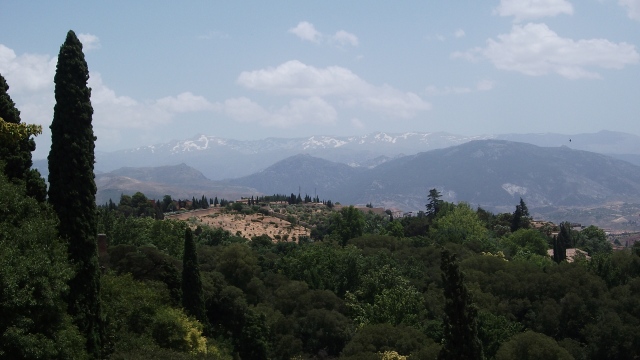
When visiting Granada it is tempting to spend all one’s time admiring the Alhambra. From afar one can admire the beauty of its red walled parapets contrasting with the snow capped Sierra Nevada whilst once inside one can absorb oneself in the sheer splendour of its fantastic palaces and its tranquil gardens. However, Granada has much more to offer the visitor.
It is a city where both Moorish and Christian history is visible in art and architecture.
Moorish Granada is exemplified by the UNESCO World Heritage Sites of the Alhambra, the Generalife and the Albaicín district whilst the Capilla Real and the Cathedral represent Christian Granada.
 .
Granada - Alhambra © Robert Bovington

 .
for more photographs of Granada click on the following link….
 .
Robert Bovington
December 2016

Tuesday, 6 December 2016

Granada – Iglesia de Santa Ana y San Gil

Iglesia de Santa Ana y San Gil © Robert Bovington

.
Diego de Siloé was a very famous and prolific architect and sculptor. His early works were principally carried out in his home town of Burgos – the gilded staircase in Burgos Cathedral being just one of many of his beautiful creations. He was the primary architect in the construction of a number of cathedrals including Granada’s. He did quite a lot of work in Granada including the planning of this church – Iglesia de Santa Ana y San Gil, a 16C church that stands in the Plaza de Santa Ana.

Monday, 5 December 2016

Granada – Corral del Carbón

The Corral del Carbón is one of the few examples of public buildings dating from the Moorish period to have survived to the current day. It was erected at the beginning of the 14th century, under the rule of the Nasrid dynasty, and it was part of the original structure of the moorish medina. It was originally a corn exchange and as an inn for visiting traders and merchants. 
.
Corral del Carbón, Granada © Robert Bovington
.
After The Reconquest, it was used by coal merchants and its name changed to the Corral de Carbón. Later, in the 16th century, it was used as an open-air comedy theatre. Today, it still serves as a place of entertainment – occasionally theatre and flamenco concerts are held in the courtyard. It also houses  the Provincial Delegation of Culture of the Junta de Andalucía and the Orquesta Ciudad de Granada.

Wednesday, 30 November 2016

Granada – carmenes

One of the delights of the Albaicin area of Granada is its carmens (carmenes in Spanish). They are hillside townhouses with private walled gardens. They originated in Moorish times and their design expresses the Islamic idea of the inner paradise, a reflection of heaven. They gardens usually have mosaic floors, shady grottos and lush flora usually comprising rose, honeysuckle, palm, wisteria and, this being Granada, pomegranate. (granada is the Spanish word for pomegranate). Of course, these delighful townhouses have Alhambra views.


Granada carmen by Robert Bovington

Granada – Carrera del Darro

..
The Carrera del Darro is a picturesque street that runs from the Plaza Santa Ana to the Paseo de los Tristes. 
It is presumably called the Carrera del Darro because the River Darro runs alongside. 
In Roman times the river was called aurus meaning ‘River of Gold’ – in those days panners made meager living searching for the precious mineral in the riverbed. 
Several name changes later it became the Río Darro.
Robert Bovington

Granada Alhambra – Torre de la Vela

view from the Plaza Santa Ana © Robert Bovington
 
 .
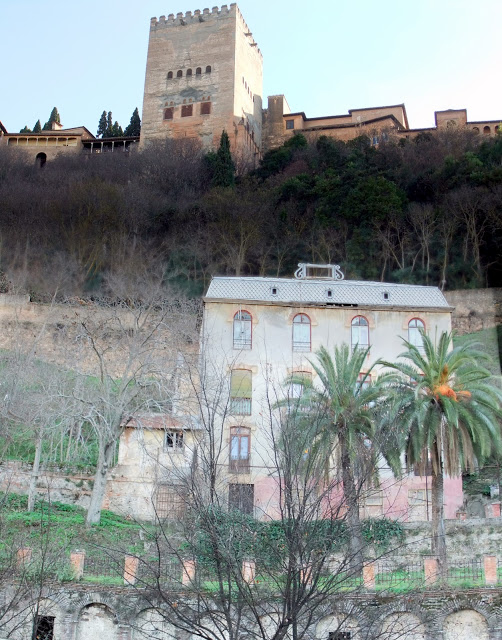
The tower in this photo is the Torre de la Vela. The bell was used by the Arabs to announce disasters. From this privileged position a vast expanse of territory could be seen including the Vega of Granada. 
 
The tower was, therefore, critical for defence and surveillance. 
Later, the Christians used the bell to strike the hours and to announce the time that farmers could irrigate their fields. 
The Spanish flag was placed on the tower on January 2, 1492 at 3 pm.

Paseo de los Tristes ( “walk of sorrows” )

Granada - paseo de los Tristes © Robert Bovington

.
Paseo de los Tristes translates as “walk of sorrows” – before the motor car, the inhabitants of Granada carried their dead along this road and up the Alhambra hill to the cemetery.

Monday, 28 November 2016

Alcaiceria of Granada (Street of Arab Shops)

Located next to the Cathedral, the Alcaiceria is a maze of narrow alleyways with a distinct Moorish feel. It was formerly the Moorish silk market.

Alcaiceria © Robert Bovington

Wednesday, 23 October 2013

al-Andalus

by Robert Bovington

In 711 an army of 7000 under the command of the Berber Tarik-ibn-Zehad crossed the Straits of Gibraltar and defeated Roderic the Visigothic King of Hispania. The Muslim armies swept through Hispania and conquered Toledo which was then the capital of the Visigothic kingdom. This marked the beginning of Muslim domination of a large chunk of the Iberian Peninsula.


The Arabs named this vast region Al-Andalus. Initially it comprised five administrative areas roughly corresponding to Andalucía; Galicia and Portugal; Castile and Léon; Aragón and Catalonia; and Septimania which apparently was where the modern French region of Languedoc-Roussillon is located. So Al-Andalus was pretty big! At that juncture, Al-Andalus was merely a province of the Umayyad Caliphate of Damascus.

Over the centuries, Al-Andalus was ruled by varying Arab dynasties. For example, the Abbasid dynasty assassinated the Umayyads and seized power, and Al-Andalus became a kingdom also known as the Emirate of Córdoba (c. 750-929). Successively it became the Caliphate of Córdoba (929-1031); then a collection of Taifa kingdoms. The last of the Arab kingdoms was the Nasrid kingdom of Granada (1232-1492), which by then was merely the territories of Almería, Málaga, and Granada. This gradual yet massive reduction in the size of this once great kingdom was, of course, due to the Reconquest of Spain by the Christians. Al-Andalus ceased to exist in 1492 when Boabdil surrendered the city of Granada to the Catholic Monarchs.


Córdoba Mezquita
Córdoba Mezquita
Córdoba - statue of Abu al Walid
Granada Alhambra - Patio de los Leones

Alhambra detail
Alhambra detail

more blogs by Robert Bovington...
"Photographs of Spain"
"postcards from Spain"
"you couldn't make it up!"
"a grumpy old man in Spain"
"bits and bobs"
"Spanish Expressions"
"Spanish Art"
"Books About Spain"

Monday, 23 July 2012

The Alhambra Palace, Granada


Posted on  

Click to visit the original post
  • Click to visit the original post
  • Click to visit the original post
  • Click to visit the original post
  • Click to visit the original post
  • Click to visit the original post
  • Click to visit the original post
  • Click to visit the original post
  • Click to visit the original post
Within Andalucía, our neighbouring province is Granada, meaning that we only live about a 90 minute drive from Granada,  one of Spain’s most beautiful cities.  Granada offers great architecture, wonderful views of the Sierra Nevada mountains and a lively cosmopolitan atmosphere.  The city is well worth of a few days of anyone´s time.
What I want to tell you about in this post, is the amazing…
From Robert Bovington:
This is an excellent post about the Alhambra from East of Málaga's Blog


Blogs by Robert Bovington...
"Photographs of Spain"
"postcards from Spain"
"you couldn't make it up!"
"a grumpy old man in Spain"
"bits and bobs"
"Spanish Expressions"
"Spanish Art"
"Books About Spain"

Thursday, 8 December 2011

Andalucía

by Robert Bovington

map of Andalucía © Robert Bovington
Andalucía is the southernmost region of mainland Spain. It is the land of bullfighting, flamenco and gypsies. It is the land of high sierras, charming white villages and magnificent cities. It is the embodiment of Spain and yet its people think of themselves as Andalucian first and Spanish second - Andalucía became an autonomous community with its own parliament in Sevilla in 1982. The regional government - the Junta de Andalucía - administers things like taxes, health and most governmental day-to-day affairs. However, the Andalucian people have voted for independence from Spain. They already celebrate Andalucian day - on February 28 each year.

Andalucía is diverse - a country of extremes and its people live life to the full. Most British holidaymakers head for the beaches of the Costa del Sol. The more adventurous and perhaps slightly more cultured may venture further afield - perhaps to the cities of Málaga or Granada. Some might even visit the fantastic Alhambra! Most do not see the real Andalucía and miss an incredible array of cultural and ecological splendour.

There are eight provinces in Andalucía: Almería, Cádiz, Córdoba, Granada, Huelva, Jaén, Málaga and Sevilla and, within this land, the diversity of things to see is astounding. There are the green foothills of the snow-capped Sierra Nevada, the alluvial plains of the Guadalquivir River and the desert lands of Almería. There are fields of golden barley and yellow sunflowers, rolling hills of olive, almond, citrus and terraces of grape - all under an intense blue sky. Scattered across this spectacular fabric are the charming white villages that often cling precariously to the many mountain slopes in the region and the great cities like Granada, Sevilla and Córdoba.

Andalucía is the second largest region of Spain and the most densely populated yet it is seventy percent of the size of England but with only seven million people and most of these are congregated around the Costa del Sol - poor sods. The result is that there are many wide open spaces and a lot of these are conservation areas. In 2005, Spain had 1.6 million hectares of protected landscape representing 9.1% of the total area - the highest in Europe. Andalucía, however, had a whopping 18.92 per cent! One hundred and sixty three actual sites were under some sort of protection including two National Parks (Sierra Nevada and Doñana), twenty-four Natural Parks and eight Biosphere Reserves.

The areas that I have visited are delightful places to visit, walk, drive or live. The Sierra Nevada is a favourite of mine and it is the location of the highest mountain in mainland Spain, Mulhacén. It also has the charming Alpujarras spread across its southern slopes. The Doñana National Park is the largest of Spain's national parks and has three distinct ecosystems: the salt marshes, the brushwood and the salt dunes. An amazing array of fauna and flora is to be found there. The same can be said of another favourite of mine - the Parque Natural de Cabo de Gata-Níjar to give it its full title. Located a short distance from Almería, some of its species of flora are unique to the area - like the pink snapdragon antirrhinum charidemi. This park really mirrors the diversity of the region - it is volcanic in origin and comprises coastal dunes, steep cliffs, spectacular beaches, salt marshes, saltpans, arid steppe inland, dry riverbeds and a substantial marine zone. It is probably this ecological diversity that has led to the park being designated a UNESCO Biosphere reserve.

Near Ronda there are other beautiful protected areas including the Sierra de las Nieves and the Sierra de Grazalema. I discovered the former when I drove from Fuengirola to Ronda via Tolox and Coín, a longer but much more splendid drive than the more direct route via Marbella. When I visited the Sierra de Grazalema I decided that I liked it even more than the Alpujarras. It too has charming pueblos blancos - like Zahara de la Sierra, which is reckoned to be one of the most attractive of the 'White Villages of Andalucía'. Grazalema too is delightful. However there are charming white villages throughout the region - many clinging precariously to hillsides.

It is not just countryside that has been afforded protection - buildings too are on the list of protected sites. For example, the Alhambra Palace in Granada is a World Heritage site - but then the great cities of Andalucía are magnificent - Sevilla with its Cathedral and the Giralda - Córdoba and the Mezquita - Granada.


The reason for this splendour was the great influence of Muslim rule on Andalucian culture. The Moors ruled over this region for eight hundred years until the Catholic Monarchs re-conquered Granada in 1492. These Arabs and Berbers of Muslim faith had a profound effect on architecture; agriculture and the arts in this region whose name, incidentally, was derived from the Arabic name "Al Andalus".

There are other fine towns in the region: Cádiz is purportedly Europe's oldest city, Ronda is the largest of the 'White Towns' and the birthplace of bullfighting, Baeza and Ubeda have magnificent Renaissance buildings and Almería has the imposing Alcazaba - also built by the enterprising Moors.

Yes - these Arab peoples built some of the most marvellous buildings in Spain and introduced irrigation systems that are still in use today in places like the Alpujarras. It beats planting bombs and running corner shops! But I digress.

Andalucía has so many wide open spaces, delightful countryside and magnificent cities that it amazes me that most holidaymakers head for the Costa del Sol. However I hope they continue to do so - the beauty of this delightful region is enhanced by the fact that most of it is not despoiled by mass tourism. I don't want English bars in the Alpujarras thank you!


Robert Bovington

Sunday, 20 November 2011

Yegen (a village in the Alpujarras)

Yegen is a little village in the Alpujarra of Granada situated between the villages of Válor and Mecina Bombarón. Like other pueblos blancos in this region, Yegen is situated amidst spectacular scenery lying as it does on the southern slopes of the Sierra Nevada.

The Alto de San Juan lies to the north of the village. It is one of the lesser peaks of the Sierra Nevada National Park but it is still pretty high with an altitude of 9,000 feet. Yegen, itself, is 4000 feet above sea level and to the south, below the village, are the valleys of Cadíar and Ugíjar. Opposite is the Sierra de la Contraviesa, which can provide tantalising glimpses of the Mediterranean beyond to travellers who view it from the appropriate location.

In the immediate vicinity of the village are forests of chestnut above the village and further up poplar. Below the village are groves of orange and olive.

Yegen is not as picturesque as villages like Pampaniera and Capileira - nor as large as Órgiva and Ugíjar. However, it is worthy of mention because it was the setting for 'South from Granada' by the celebrated English author Gerald Brenan. He lived in Yegen between 1920 and 1930. A number of famous friends visited him there including Virginia Woolf.

Gerald Brenan
Brenan was one of the foremost English chroniclers of Spain and its people. He wrote 'The Spanish Labyrinth' and 'The Face of Spain' but it was 'South from Granada' for which he is most famous. It was his autobiography of his time in Yegen.

There is a plaque over the door of the house where the author lived and one of the streets in the village is named after him. There is even a 'Sendero de Gerald Brenan' footpath - it is one of a number of walking routes in the vicinity of Yegen. The long distance GR7 passes nearby. It is part of the International E-4 footpath that runs all the way from Tarifa to Greece. So even without Gerald Brenan, Yegen can lay claim to being well and truly on the map!


Tuesday, 18 October 2011

Alhambra


The Alhambra sits at the top of the highest wooded hill in the city of Granada. Not only that - this red-walled palace has the fairytale backdrop of the snow-capped peaks of the Sierra Nevada. Well, for most of the year the mountains are snow-capped - in August, they are somewhat er... rock-capped!


If the view from afar is spectacular, the interior of the Alhambra is simply stupendous! There is so much of artistic merit to see. However, there are four main areas to explore: the Alcazaba, the Palace of Charles V, the Casa Real or Royal Palace and the Generalife Gardens.

Lion Courtyard
The central nucleus of the Alhambra is the Nasrid Palaces. Visitors, who have already admired other parts of this magnificent fortress, are spellbound when they encounter the magnificence of these palaces. If you do not have time to explore the Alhambra in totality, you simply must allow time to visit the Nasrid Palaces! They are built around three courtyards - the Golden Room, the Myrtle Courtyard and the Lion Courtyard.


The Hall of the Ambassadors needs special mention as it is the largest and was the grand reception room. The throne of the sultan was placed opposite the entrance. It was here that Christopher Columbus received Isabel and Ferdinand's support to sail to the New World. 

The delightful Generalife garden not only has an avenue of cypress trees, terraced gardens, clipped hedges and grottos, but also fountains and a long water channel (acequia) with water jets surrounded by all manner of plants and flowers. It is a delightful place. No wonder composer Manuel de Falla wrote a piece of music about it!


Robert Bovington

Monday, 17 October 2011

Yegen (Alpujarran village)


Yegen is a little village in the Alpujarra of Granada situated between the villages of Válor and Mecina Bombarón. Like other pueblos blancos in this region, Yegen is situated amidst spectacular scenery lying as it does on the southern slopes of the Sierra Nevada.


The Alto de San Juan lies to the north of the village. It is one of the lesser peaks of the Sierra Nevada National Park but it is still pretty high with an altitude of 9,000 feet. Yegen, itself, is 4000 feet above sea level and to the south, below the village, are the valleys of Cadíar and Ugíjar. Opposite is the Sierra de la Contraviesa, which can provide tantalising glimpses of the Mediterranean beyond to travellers who view it from the appropriate location.
In the immediate vicinity of the village are forests of chestnut above the village and further up poplar. Below the village are groves of orange and olive.
Yegen is not as picturesque as villages like Pampaniera and Capileira - nor as large as Órgiva and Ugíjar. However, it is worthy of mention because it was the setting for 'South from Granada' by the celebrated English author Gerald Brenan. He lived in Yegen between 1920 and 1930. A number of famous friends visited him there including Virginia Woolf.


Brenan was one of the foremost English chroniclers of Spain and its people. He wrote 'The Spanish Labyrinth' and 'The Face of Spain' but it was 'South from Granada' for which he is most famous. It was his autobiography of his time in Yegen.
There is a plaque over the door of the house where the author lived and one of the streets in the village is named after him. There is even a 'Sendero de Gerald Brenan' footpath - it is one of a number of walking routes in the vicinity of Yegen. The long distance GR7 passes nearby. It is part of the International E-4 footpath that runs all the way from Tarifa to Greece. So even without Gerald Brenan, Yegen can lay claim to being well and truly on the map!


Sunday, 22 May 2011

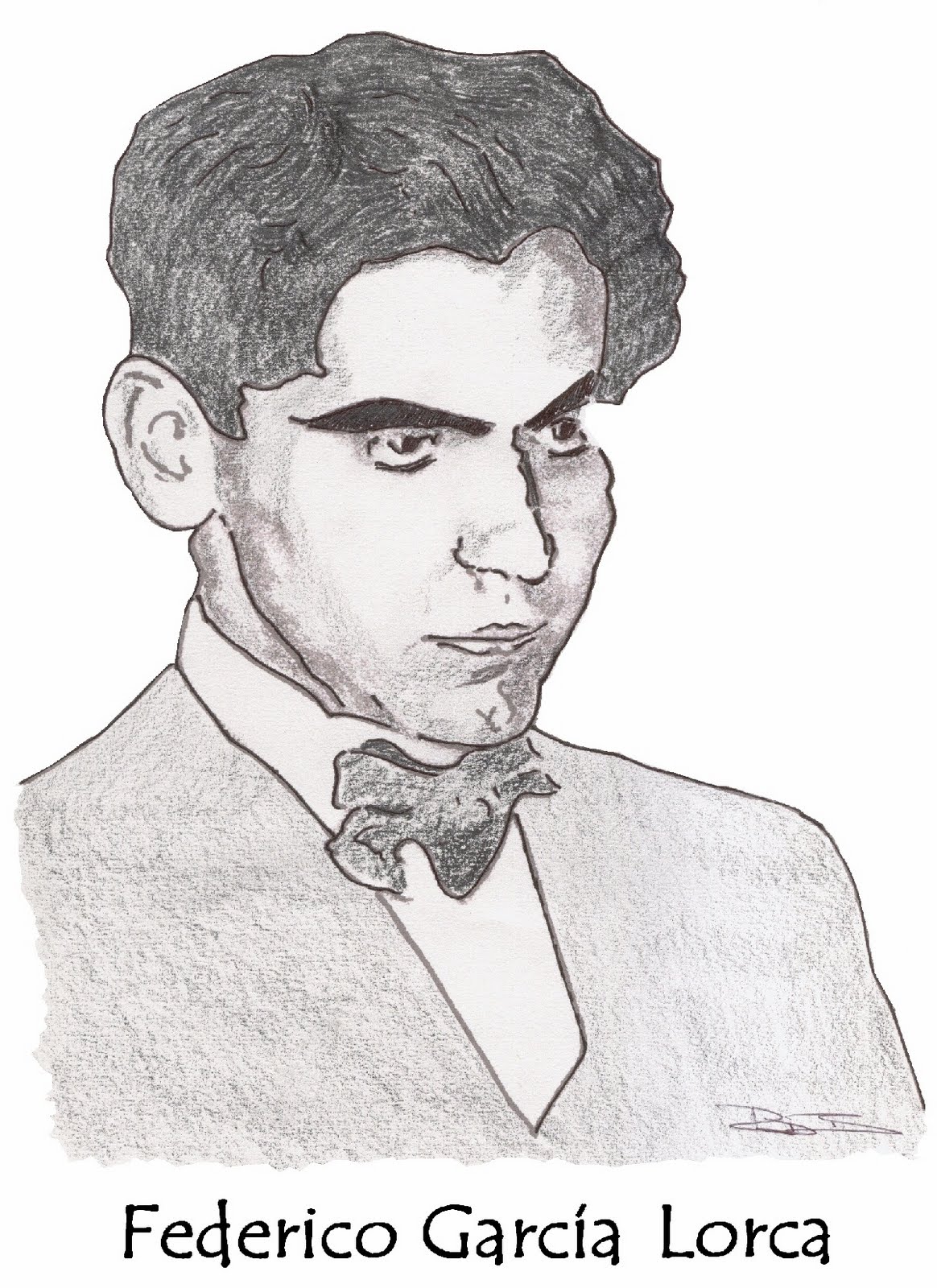
Federico García Lorca


by Robert Bovington


"A poet never gets shot" - Federico García Lorca


Federico García Lorca was born in the village of Fuente Vaqueros, Granada in 1898. He is considered by many people to be the greatest Spanish poet and playwright of the 20th century - well, in Spain and particularly Andalucía he is highly regarded anyway! 

I personally was not aware of the poet and his works until I accompanied a Spanish friend on a visit to the Natural Park of the Cabo de Gata in the province of Almería. Not far from the village of Rodaquilar, there is an old farm building called "Cortijo del Fraile". It was here that a chilling real life murder took place - an event on which Lorca based his play 'Blood Wedding'.


This is one of his best-known works along with 'Gypsy Songs', 'Poet in New York', 'Yerma' and 'The House of Bernarda Alba'. 

In nearby Granada, Lorca is revered. This was not always the case - or at least not openly because his books were prohibited and mention of his name forbidden during the Franco years. He had antagonised the Catholic Church, the Monarchy, the Military and landowners with his writings where he had focussed on social injustice and human suffering. He had particularly condemned the Catholic Reconquest of Arab Granada. In his view a great civilisation was lost and poetry, architecture, astronomy and delicacy replaced by the poor, narrow-mindedness of the new city inhabitants. In some ways I have to agree. Whenever I gaze upon the sheer splendour of places like the Alhambra in Granada, the Mezquita in Córdoba or even the irrigation systems in the Alpujarras, I wonder what has gone wrong with the Muslim people. Nowadays, they only seem fit for running corner shops or planting bombs! 

Anyway, because of his views, Lorca was a prime target for the Franco death squads. The fact that he was also a homosexual probably didn't help either! So he was killed. In 1936, during the Spanish Civil War, Fascist soldiers shot him! 

Over seventy years later, his home city of Granada has started to honour him. Granada's airport is called 'Aeropuerto Federico García Lorca'; postcards of the poet and his drawings are displayed alongside those of the Alhambra in the city's shops and kiosks and the tourist industry has jumped on the bandwagon by offering 'Lorca route' itineraries. Visits can be made to a number of sites in the area related to Lorca's life including Víznar near Granada, the site of his murder. 

It was a short life but a fruitful one. His works are a testimony to his literary prowess even if his gravestone isn't - he was buried in an unmarked grave!

Saturday, 21 May 2011

Washington Irving (1783-1859)

by Robert Bovington

One of the books that all lovers of Spain and its culture should have on their bookshelves is 'Tales of the Alhambra'. The American romantic writer Washington Irving wrote it following an extended stay in Granada.
Whilst in Spain, working for the American Legation, he had spent a brief time in Sevilla before setting out for Granada with a Russian travelling companion in April 1829. On arriving in this beautiful city, he immediately fell under its spell. He had the extraordinary good fortune to spend several months living in the Alhambra. The book is one of the classic travel books. It is a groundbreaking account of his time there including folklore and local gossip about the handsome princes and learned Moors who had lived in the palace during the years of the Moorish Kings' residencies.

Washington Irving
sketch by Robert Bovington


Washington Irving had already achieved success as a writer - he had written 'The History of Christopher Columbus' and 'Chronicle of the Conquest of Granada' before his visit to the Alhambra as well as a number of other works that included biographies and essays. However, he is perhaps best known for his short stories. His most famous being 'The Legend of Sleepy Hollow' and 'Rip Van Winkle'.
In 1806, he had qualified as a lawyer but writing was his first love and, following his early successes in this field, he was assured of earning a living as an author - so much so that he was the first American author to achieve International fame. Another title attributed to him was 'first American man of letters'.

more blogs by Robert Bovington...

"Photographs of Spain"
"postcards from Spain"
"you couldn't make it up!"
"a grumpy old man in Spain"
"bits and bobs"
"Spanish Expressions"
"Spanish Art"
"Books About Spain"

CHRONICLE OF THE CONQUEST OF GRANADA by Washington Irving


Reviewed by Robert Bovington

Half a century ago, in my school history lessons, I received a very blinkered history of Spain. It consisted almost entirely of the Spanish Armada, Christopher Columbus’ Discovery of America, the Inquisition, the Battle of Trafalgar, Catherine of Aragon and something about Francis Drake singeing the King of Spain’s beard at Cádiz. So, most of it was around the time of Ferdinand and Isabella and, yet, we children learnt nothing of the Moors occupation of Spain, let alone the conquest of Granada. Over the years, I have read a number of history books and all appeared to give a one-sided view of the ‘Reconquista’. Washington Irving’s "Chronicle of the Conquest of Granada” is a welcome departure from the norm.

Not only, in my opinion, is the book a jolly good read, but it appears to be a comprehensive history of the series of events and military campaigns that led to the expulsion of the Moors after 700 years on the Iberian Peninsula.

Washington Irving was something of a hispanophile and yet this book provides the reader with a somewhat balanced account of events. At times, he shows sympathy for the Moors – so much so, that he calls attention to the barbarity of the Christians and the prejudices and ignorance of the Spanish Court. He does this in the guise of “Fray Antonio Agapida”, a fictitious character who represents the monkish zealots of the period.

This is no work of fiction, however, though it reads like one. Irving carried out much research during his time in Granada and Seville including visiting the towns and villages that formed the backdrop for the events of this delightful book.

Robert Bovington
March 2011


Friday, 20 May 2011

Panoramio - Photos by Robert Bovington

Click on the link below to view my Panoramio photographs. Some examples of my photos are shown below...


Panoramio - Photos by Robert Bovington

Las Salinas in the Cabo de Gata natural park

Salamanca Cathedral - view over River Tormes

Gaucín (Andalucía)