Showing posts with label photo. Show all posts

Saturday, 10 December 2016

Málaga

Málaga, the second largest city in Andalucía, is surprisingly attractive given its close proximity to the Costa del Sol. In recent years, it has made some concessions to tourism but the changes made have only further enhanced the city’s reputation as a cultural tourist destination…
.
Málaga Cathedral © Robert Bovington
.

my complete article is at:-
http://bobbovington.blogspot.com/2012/03/malaga.html

my photographs of Málaga:-
http://www.panoramio.com/user/2391258/tags/Málaga

Robert Bovington
December 2016

Monday, 5 December 2016

Granada – Corral del Carbón

The Corral del Carbón is one of the few examples of public buildings dating from the Moorish period to have survived to the current day. It was erected at the beginning of the 14th century, under the rule of the Nasrid dynasty, and it was part of the original structure of the moorish medina. It was originally a corn exchange and as an inn for visiting traders and merchants. 
.
Corral del Carbón, Granada © Robert Bovington
.
After The Reconquest, it was used by coal merchants and its name changed to the Corral de Carbón. Later, in the 16th century, it was used as an open-air comedy theatre. Today, it still serves as a place of entertainment – occasionally theatre and flamenco concerts are held in the courtyard. It also houses  the Provincial Delegation of Culture of the Junta de Andalucía and the Orquesta Ciudad de Granada.

Teruel – Escalinata ‘Lovers of Teruel’


.
The Escalinata is a staircase that climbs the hill from the railway station to the city centre. It is quite a recent addition to the city’s fine architecture but quite splendid for all that – it was designed by José Toran in 1920. It is decorated with ceramic tiles and is in mock Mudéjar style. The Escalinata includes a beautifully carved embossed relief depicting a scene from the legend of the Lovers of Teruel.

Almería - Iglesia Santiago

Iglesia Santiago, Almería © Robert Bovington
  .
The main façade of this church is really rather splendid. Its imposing Renaissance portal is similar to the Cathedral’s doorways and above the door are magnificent sculptures including one depicting St. James, Slayer of the Moors. This church is one of the oldest in the town. It was built in the times of Bishop Fray Diego Fernández de Villalán who occupies an important place in the annals of the Church in Almería because of his zeal as priest and founder of new buildings in the city. His shield is also to be found above the main door.

Almería – Iglesia San Sebastián


.
In Moorish times, a mosque stood here and later, in Christian Almería, it became a shrine to Saint Sebastian. In the 17th Century, the church was built. It was consecrated in 1679, during the Bishopric of Antonio de Ibarra whose coat of arms can be observed above the side door.

Almería – Convento Las Puras

 
Las Puras © Robert Bovington
 .
‘Las Puras Covent’ is now a church, which was built in the 17th century on the site of a former convent.

Sorbas – Alfarería barrio

one of a number of pottery shops in the Alfarería barrio...
.

.
  a potter at work...
.

Karst en Yesos de Sorbas

The Karst en Yesos de Sorbas Natural Park is an area for potholing and exploring caves.
 .

 .
It is hard to believe that this area was once under water as part of the Mediterranean. Of course, this was 6 million years ago. Now it is potholing country. The erosion of layers of limestone has formed caves and galleries.

Almería – walls of San Cristóbal Hill

Almería - Muralla de Jayrán © Robert Bovington
 .
Muralla de Jayrán’ – the walls that were built to enlarge the city’s defences in the 11th century. They run all the way to the ‘Cerro de San Cristóbal’ (the hill of Saint Christopher).

Almería – Alcazaba Torre de Homenaje

Torre de Homenaje, Alcazaba Almería © Robert Bovington
 .
One of the towers, ‘Torre de Homenaje’, has the coat of arms of the ‘Catholic Monarchs’ above the doorway. It was Ferdinand and Isabella who ordered the construction of this, the castle part of the ‘Alcazaba’.

Sunday, 4 December 2016

Almería Alcazaba flora

Almería Alcazaba entrance © Robert Bovington
.
Bougainvillea, prickly pear, aloe vera, mimosa, and jasmine tumble down the slopes near the entrance. There are also gardens within the grounds of the citadel both formal and informal. Poplar, willow, rose bushes and lavender are just some of the flora to be found within.

Sevilla – Torre del Oro

Sevilla – Torre del Oro © Robert Bovington


.
The Torre del Oro is a 13th-century Moorish watchtower. There are varying opinions as to how it this dodecahedral tower got its name. Some say that the tower was originally adorned with gold leaf; others say that it was used as a warehouse to store gold from the New World expeditions. Perhaps a simpler explanation is that it is golden in colour!

Saturday, 3 December 2016

Rodalquilar – old gold mine

old gold mine workings in Rodalquilar © Robert Bovington
 .
This part of Spain has always had an abundance of raw materials and this area of the Cabo de Gata has been extensively mined for 2000 years. The Romans extracted silver here. Later ‘lead fever’ took hold in the middle of the 19th century. However, the golden years for Rodalquilar followed the discovery of gold around 1880.

Friday, 2 December 2016

Sierra Nevada wildlife

The Sierra Nevada teems with wildlife. Ibex share their habitat with wild boar and wildcats whilst in the air, owls, sparrow hawks and eagles soar. Further down, in the Alpujarras, squirrels, badgers, foxes, lizards and turtles are to be found and all manner of birds including robins, chaffinches, woodpeckers, wood pigeons and the hoopoe. In the rivers are trout and salmon.
.
Sierra Nevada nr Puerto de Ragua © Robert Bovington

Cartagena – Peral submarine

The Peral submarine in Cartagena - photo © Robert Bovington
 
.
According to local tourist information, Isaac Peral invented the submarine in 1889. Whilst Señor Peral undoubtedly designed the fine specimen of a U-boat that is on display, the locals are wrong to allege that he invented the submarine – a Dutchman, Cornelis Drebbel, built the first one in 1620! Submarines were also used during the American Civil War (1861-65).

Guadix Cathedral

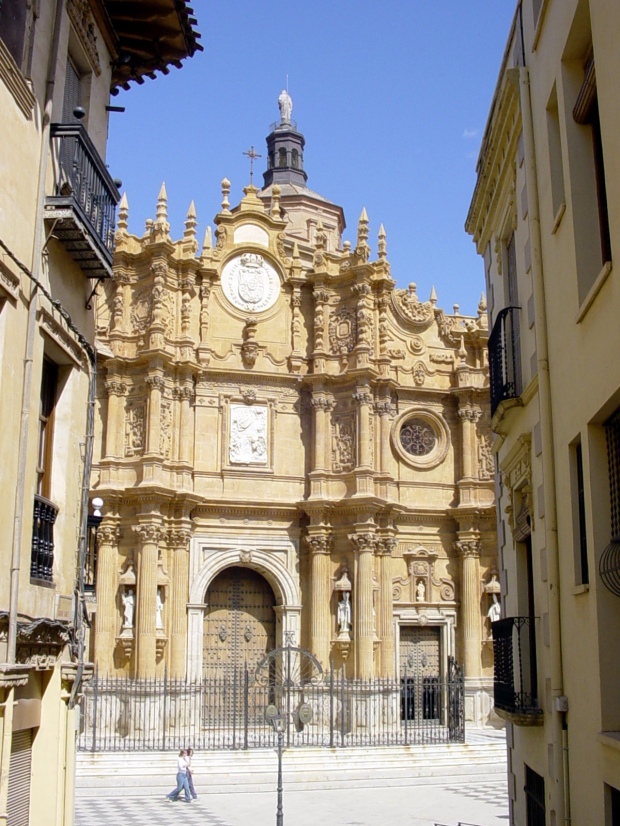
The Cathedral with its Baroque tower looked impressive from the outside but inside I felt that it was rather dark and gloomy. It stands in the Plaza de Constitución and this area of the town, the Barrio de Santiago, has many fine buildings.
..

guadix-sept-2003-002
Guadix Cathedral © Robert Bovington

Cabo de Gata Natural Park – Salinas de Acosta


This photograph was taken near the tiny hamlet of Salinas de Acosta, where salt from the Salinas is piled in great heaps. Its church, which has a very tall tower, dominates the area for miles around and is almost on the seashore.
.Other blogs by Robert Bovington:

“Photographs of Spain”
“Spanish Impressions”
“you couldn’t make it up!”
“a grumpy old man in Spain”
“bits and bobs”
“Spanish Expressions”
“Spanish Art”
“Books About Spain”

Thursday, 1 December 2016

Cherín – a village in the Alpujarras

Cherín is a small village in the Alpujarras. It has an oil mill and many orange, mandarin and olive groves as well as almond trees.

 
Cherín © Robert Bovington


Enix – a pueblo blanco in the Sierra de Gádor

Immediately behind Roquetas is the Sierra de Gádor mountain range – it is a twenty minute drive to Enix, one of my favourite pueblos blancos. To the northwest is Spain’s highest mountain range, the Sierra Nevada, whose southern slopes are dotted with the charming white villages of the Alpujarras.


-..

Enix is a typical pueblo blanco. Often old men with flat caps and walking sticks sit on the benches in the town square busily chatting and watching the world go by. Dogs laze in the doorways of the white houses. Just beyond the town centre, pine and eucalyptus trees border the road.


 .

 Other blogs by Robert Bovington:

 .

“Photographs of Spain”
“Spanish Impressions”
“you couldn’t make it up!”
“a grumpy old man in Spain”
“bits and bobs”
“Spanish Expressions”
“Spanish Art”
“Books About Spain”

Wednesday, 30 November 2016

Cuenca - a UNESCO Heritage site in Spain

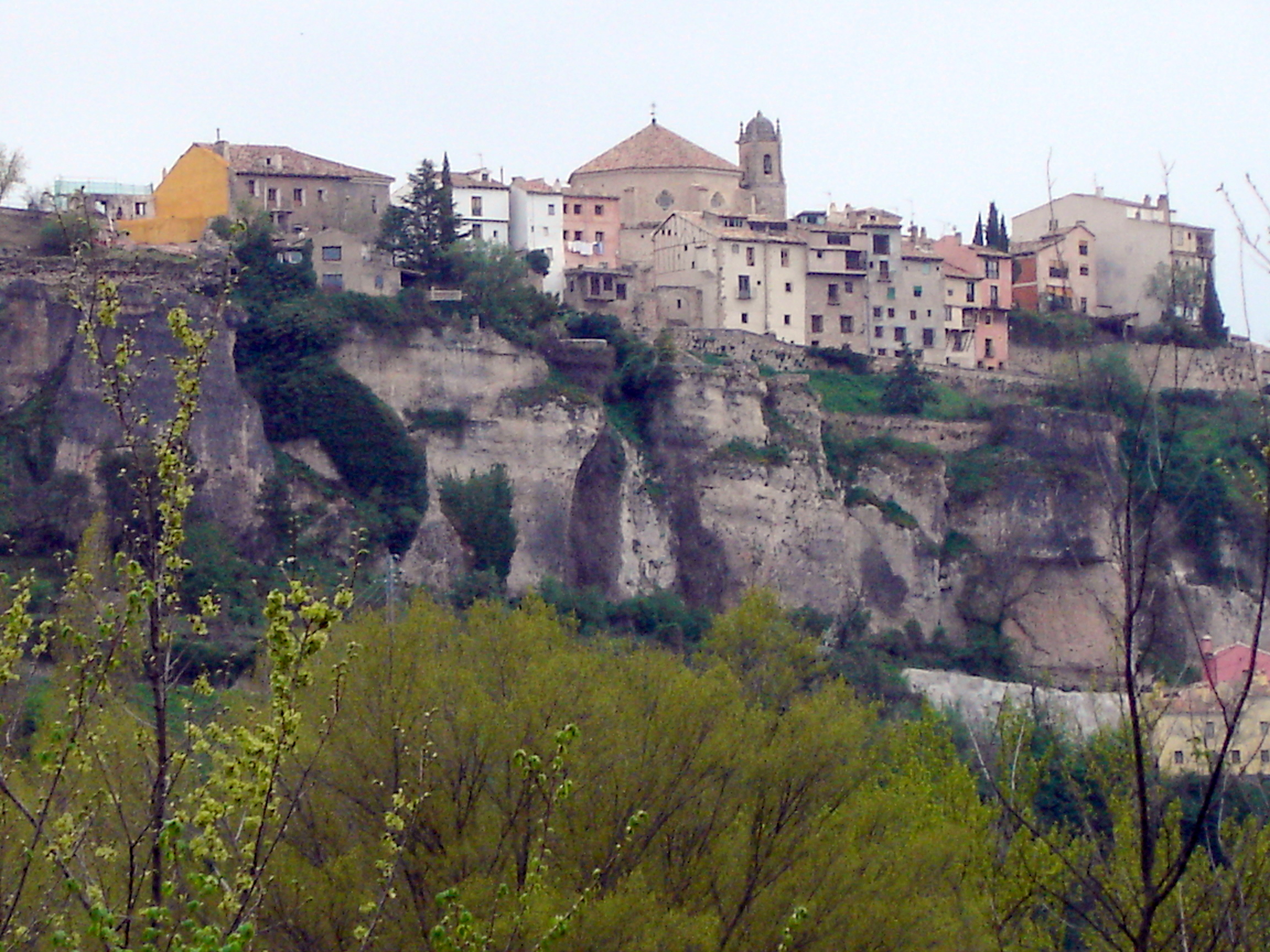
The beautiful and ancient city of Cuenca is steeped in history and perfectly preserved and that is why UNESCO declared it a World Heritage Site. Famous for its ‘Hanging Houses’, there are many other reasons why this city is so special.
.
Image
.
The old town is perched on a precipice above two deep gorges carved out by the rivers Huécar and Júcar. It is here that the medieval Casas Colgadas – the Hanging Houses literally overhang the Huécar gorge.

Within the old quarter are handsome old mansions interspersed with interesting religious buildings. The 12th century Cathedral is quite unique in that it combines Gothic and Anglo-Norman style. Queen Leonor, the wife of Alfonso VIII, ordered its construction. There are a number of museums in the city including the National Museum of Abstract Art and the Provincial Archaeological Museum.

Robert Bovington