Showing posts with label places in spain. Show all posts

Sunday, 22 December 2013

Jaen

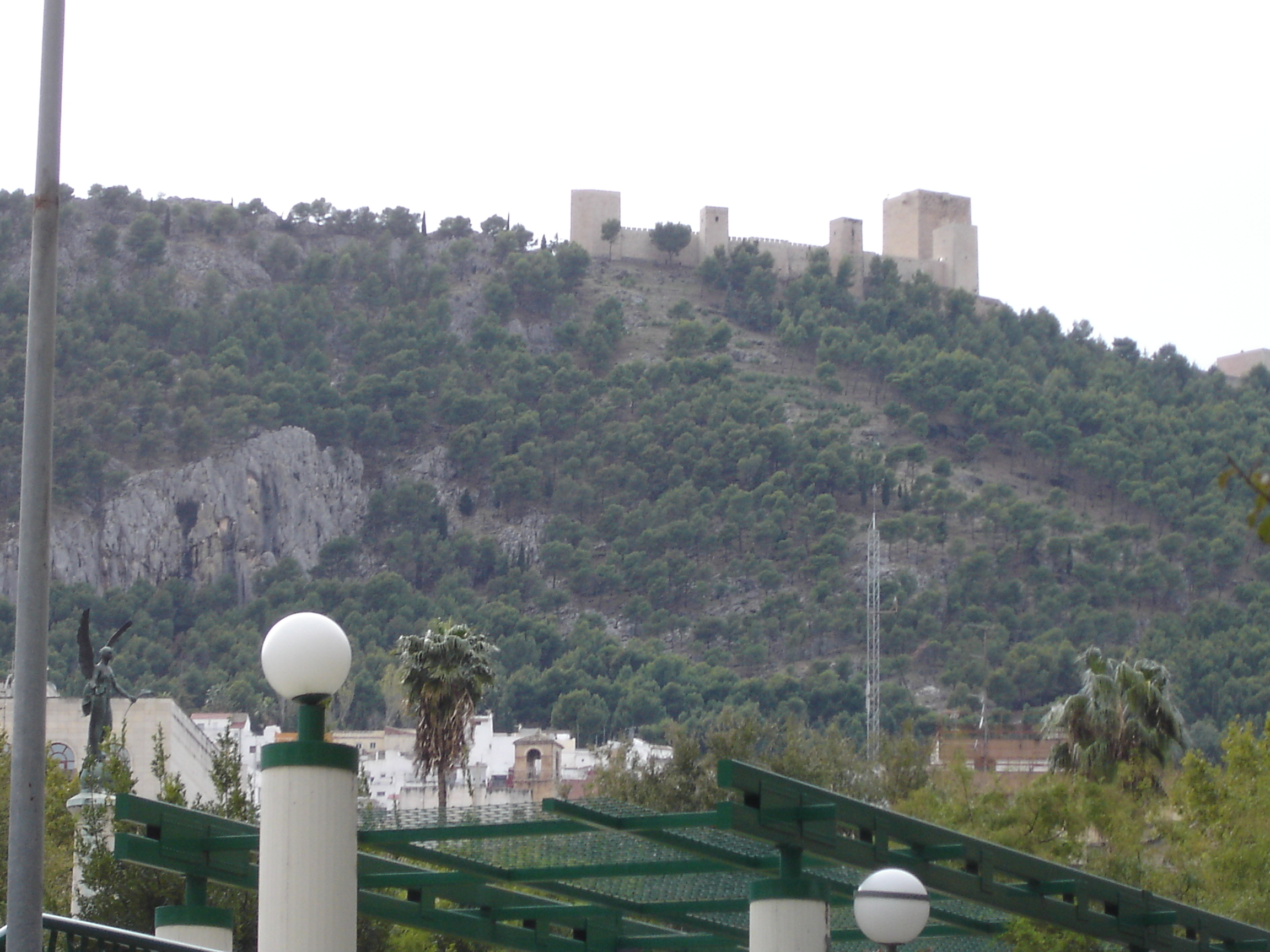
Castilla de Santa Catalina, Jaén
The city of Jaén may not have the appeal of Granada or Córdoba but, nevertheless, it is pleasant enough. It sits amidst an undulating plain of olive trees at the foot of the hill of Santa Catalina on which stands the castle. The Castillo de Santa Catalina is a 13th century fortress with spectacular views. It is now a parador.

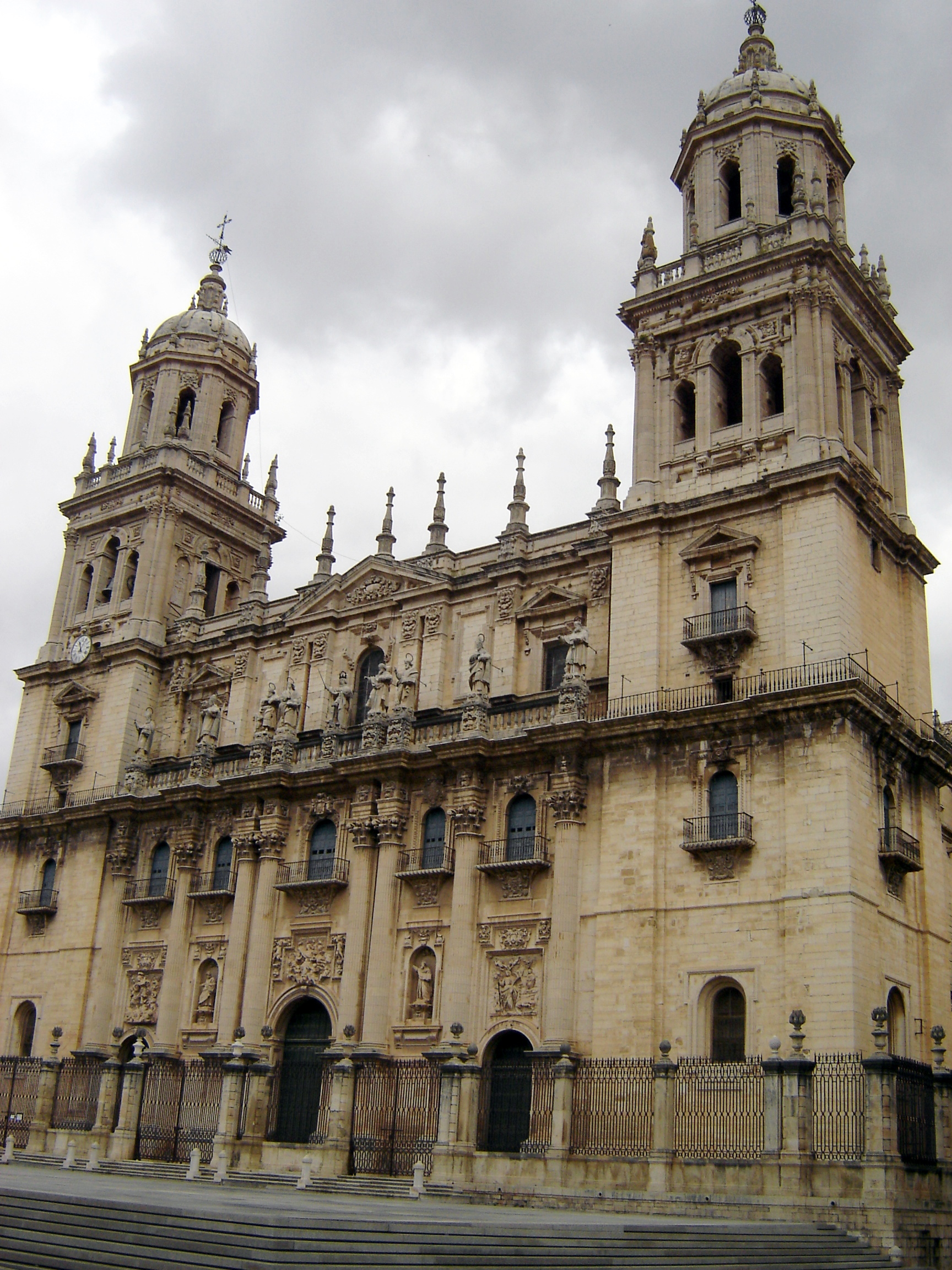
The city’s old town has most of the places of interest. Jaén Cathedral is spectacular. It has a magnificent Renaissance façade and was built between the 16th and 17th centuries. It is surely one of the finest cathedrals in Andalucía, if not Spain, and dominates the old town. This old quarter of the city consists of a maze of narrow streets and small squares, many lined with religious buildings.
Jaén Cathedral
Jaén Cathedral

In the new town there is the Museo Provincial, a creditable museum with interesting paintings and Roman artefacts.

Jaén - Ayuntamiento and other buildings in Plaza Santa María


 more blogs by Robert Bovington...
"Photographs of Spain"
"postcards from Spain"
"you couldn't make it up!"
"a grumpy old man in Spain"
"bits and bobs"
"Spanish Expressions"
"Spanish Art"
"Books About Spain"

Monday, 23 July 2012

The Alhambra Palace, Granada


Posted on  

Click to visit the original post
  • Click to visit the original post
  • Click to visit the original post
  • Click to visit the original post
  • Click to visit the original post
  • Click to visit the original post
  • Click to visit the original post
  • Click to visit the original post
  • Click to visit the original post
Within Andalucía, our neighbouring province is Granada, meaning that we only live about a 90 minute drive from Granada,  one of Spain’s most beautiful cities.  Granada offers great architecture, wonderful views of the Sierra Nevada mountains and a lively cosmopolitan atmosphere.  The city is well worth of a few days of anyone´s time.
What I want to tell you about in this post, is the amazing…
From Robert Bovington:
This is an excellent post about the Alhambra from East of Málaga's Blog


Blogs by Robert Bovington...
"Photographs of Spain"
"postcards from Spain"
"you couldn't make it up!"
"a grumpy old man in Spain"
"bits and bobs"
"Spanish Expressions"
"Spanish Art"
"Books About Spain"

Sunday, 22 July 2012

Protected Landscapes in Spain

by Robert Bovington

Spain has a rich scenic diversity. Vast areas of the country remain wild, rugged and sparsely populated and large parts of the country are protected. Within Europe, Spain leads the way in the conservation of its heritage. There are many categories of protection including national parks, natural parks and biosphere reserves. There are two biosphere reserves close to my heart and close to where I live - the Cabo de Gata and the Sierra Nevada. The Cabo de Gata was designated a UNESCO biosphere reserve in 1997, the Sierra Nevada in 1986. Both meet UNESCO's criteria in that they are ecologically diverse and demonstrate a balanced relationship between humans and the environment.


The World Network of Biosphere Reserves is the collection of all 531 biosphere reserves in 105 countries (2009). Spain has thirty-three which is a proportionately higher number compared with other European countries.

These include the spectacular Ordesa National Park in the Pyrenees, the lowland wilderness of the Doñana National Park in western Andalucía and the snow-capped heights of the Picos de Europa in Cantabria.

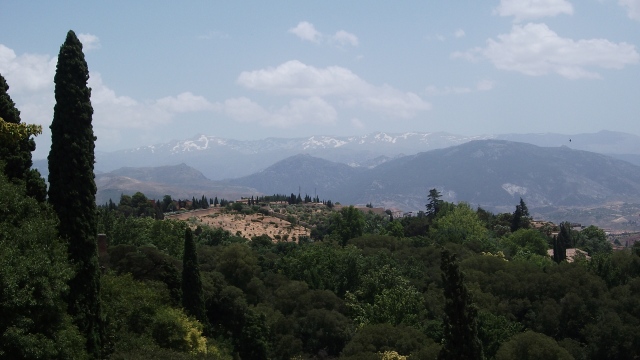
The Sierra Nevada also has National Park status but, then, it has quite a lot going for it - it contains the Iberian Peninsula's highest mountains, which are the spectacular backdrop to the magnificent city of Granada.


Sierra Nevada - view from Puerto de Ragua
photo: Robert Bovington

Spain was one of the first countries in Europe to establish national parks when, in 1918, the Montaña de Covadonga National Park was established. Today, this beautiful area is known as the Picos de Europa, situated in the Cantabrian Mountains in northern Spain. Incidentally, the Picos de Europa has also achieved UNESCO Biosphere status. Currently, there are 15 national parks in Spain.

There are also many hundreds of natural areas that have been afforded protection. National parks are afforded the highest level of protection followed by natural parks. There are also natural monuments, special protection areas, nature reserves, protected landscapes, biotopes, nature enclaves, wildlife reserves, marine reserves, rural parks, natural landscapes of national interest and sites of scientific interest and, of course, biosphere reserves.

Natural parks are pretty special but there are too many to list here. Every autonomous community has a number of protected areas with Catalonia, Andalucía and the Canaries being the most prolific with several hundreds between them.

In Andalucía there are around 150 protected areas including 23 natural parks. Three of my favourites are the Cabo de Gata-Níjar Natural Park, the Sierra de Grazalema Natural Park and the Sierra de las Nieves. All three are biosphere reserves.

Sierra de Grazalema
photo: Robert Bovington

Sierra de las Nieves
photo: Robert Bovington

Extract from my Pinterest "Spain - natural spaces" pinboard

Sunday, 5 June 2011

The Parque Natural de Cabo de Gata-Níjar


Cabo de Gata - Las Salinas
In the south of Spain, a few miles east of Almería, there is a delightful area that offers miles of unspoilt beaches with secluded coves, sand dunes and much more within a protected coastal reserve. It is the Cabo de Gata, a natural park that I think is quite splendid. It is one of my favourite areas in the province of Almería.

It is a nature lover's delight. There are thousands of different species there including the pink flamingo and the rare Italian wall lizard. There are eagles, kestrels, puffins, cormorants, oystercatchers and storks. The extraordinary wealth of wildlife is unbelievable. There are some species that are unique to the park. This includes the dragoncillo del Cabo, which flowers all the year round. Europe's only native palm tree - the dwarf fan - is to be found here. In the sea, there are bream, grouper, prawn and squid. There are hundreds of species of seaweed, which are home to the many varieties of crustacean, mollusc and fish.

Perhaps the reason for the great variation in wildlife is due to the diverse habitats in this natural park. The 71,500 acres of the Cabo de Gata is volcanic in origin and comprises coastal dunes, steep cliffs, spectacular beaches, salt marshes, saltpans, arid steppe, dry riverbeds and a substantial marine zone. It is probably this ecological diversity that has led to the park being designated a UNESCO biosphere reserve.

As well as the spectacularly varied landscape, there are also scattered settlements of whitewashed, flat roofed houses and delightful little fishing villages.

One of the things I like about the natural park is that man's intervention can scarcely be detected in this area. There has been some development but it has mostly been confined to the existing settlements. San José used to be a small fishing village. Nowadays it is a tourist village but it has not been spoiled too much. La Isleta del Moro - only a cluster of fishing huts and houses a few years ago - is undergoing some development. Apartments are being built but they appear to be tasteful and their white façades blend in with their surroundings. Other villages have also been expanded slightly.

San José
La Isleta del Moro
Cortijo del Fraile
Between Los Albaricoques and Rodalquilar is a cluster of ruined buildings. The largest one is known as the 'Cortijo del Fraile'. A notice outside refers to it as a typical example of a farmhouse. However, that is only part of the story.

The famous Spanish author, Federico García Lorca used it as the setting for his chilling play 'Blood Wedding'. It was no coincidence. It is allegedly based on real life events. It is said that in 1928, a tenant farmer lived there. Apparently, he offered a large dowry to the younger of his two daughters. This angered the elder sister. A conspiracy was hatched whereby her brother-in-law would offer marriage and split the dowry with the elder sister and her husband. However, on her wedding day, the bride attempted to run away with her cousin, planning to return after the marriage was consummated to claim the dowry. As the newlyweds set out at night, they met with the elder sister and her husband. The cousin was shot in the head and the bride left half-strangled. The sister and her husband were imprisoned and the bride lived as a spinster. Apparently, she died quite recently.

The building has also been used for a number of spaghetti westerns including 'The Good the Bad and the Ugly'.

Rodalquilar
The road between the 'Cortijo del Fraile' and Rodalquilar is a bit rough but the necessary slow driving enables the traveller to enjoy the scenery. It is quite a pleasant sight, driving along this road with the yellow flowers of the pita plant silhouetted against the blue sky and the low mountains in the distance, especially on my last visit, when I observed lots of hoopoe flitting from plant to plant.

This part of Spain has always had an abundance of raw materials and this area of the Cabo de Gata has been extensively mined for 2000 years. The Romans extracted silver here. Later 'lead fever' took hold in the middle of the 19th century. However, the golden years for Rodalquilar followed the discovery of gold around 1880. At the beginning of the 20th century, a British company acquired the mining rights and, under the name 'Minas de Rodalquilar', started actively mining the precious metal. They built the millstone in which 900 tons of rock was ground day by day. Rodalquilar, with its electricity supply and its tennis courts and other luxuries was the envy of the other Andalucian villages.

Rodalquilar - old mine workings
By the late 1930s, the British company had extracted 2,000 kg of gold and following the end of the Spanish Civil War; the mines were handed over to the Spanish government. In 1956, a second golden age came to Rodalquilar. Around 500 men from faraway countries arrived to seek work in the mines and consequently 4000 kg of gold was extracted, together with 165,000 kg of silver. The village had struck it rich. Among the new buildings erected were schools, a cinema, and a casino. This was not to last. In 1966, Spain's only gold mines were closed down. This could have led to Rodalquilar becoming a ghost town. In fact, it very nearly did so, but probably due to the protected status of the Cabo de Gata, some of the old houses have been restored.

When I visited, I walked along to a viewing platform in order to look down on the old mine workings. It was a pleasant enough view. It was not so much the dilapidated buildings that made the panorama attractive, though they were interesting enough, the Rodalquilar valley beyond the mining area looked splendid - especially with the white houses of the town further on and the range of mountains in the distance.

Driving downhill towards the town, the dusty track becomes a properly made up road with palms and adelfa bushes lining both sides. Near the old disused buildings is an Information Centre where visitors can obtain maps and guides to the area. There is a botanical garden nearby.

Playa de Playazo
The highlight of any trip to the Cabo de Gata is to visit one of the many delightful beaches. One of my favourites is the Playa de Playazo. This long unspoiled beach is only a short distance from Rodalquilar. On the way there, visitors can take a detour to view another ruin, this time a small castle called 'Castillo San Ramón', a defensive fort from the 18th century.

The Playa de Playazo enjoys an exceptional environmental setting. Incidentally, the beach is also known as the Playa de Rodalquilar due to its close proximity to the town. Playa de Playazo roughly translates as big beach. It is utterly stunning. It is long and unspoiled and its sweeping bay enjoys excellent views. It is one of a number of attractive beaches in the Parque Natural. When I visit, I usually walk along the sandy coastline until I reach some cliffs. They are easy to walk on because they are smooth, not the jagged harsh variety found elsewhere in this area. It is enjoyable clambering over the cliffs and, near the next cove, there are fossils embedded in the rocks. One could be tempted to take a hammer and chisel in order to take home some samples but that would probably be illegal - the Cabo de Gata's special status as a protected environment means there are a number of restrictions. For example collecting protected species is not allowed, nor is removing soil, sand or seabed. Fishing is restricted. It is not allowed in some parts of the park with or without a permit. Fishermen still make a living in this area but a maritime mile restriction zone has been declared in order to prevent the larger fishing vessels exhausting the seabed or destroying the natural habitat.

Whenever I visit, I look for a delightful little cove. It is only big enough for three or four people - a tiny private beach. To reach it one has to either jump seven or eight feet from the cliff-side to the beach or swim underwater through the little tunnel in the rock face. It is a perfect little haven for a seaside picnic. At the back of the beach is a shallow cave that provides protection from the fierce Almerian sunlight.

There are a number of delightful coastal villages and many more pristine beaches, some of them only accessible on foot.

Aguamarga, a small coastal town that is quite pretty. There are the traditional single story whitewashed buildings, many festooned with flowers especially bougainvillea.

Agua Amarga

Las Negras gets its name from the shape and colour of the black hill that one can observe from the beach. It was formed by the solidification of volcanic lava. I am not that impressed with Las Negras, though I might have liked it thirty years ago. It does have character but also lots of hippies. When I last visited, a group of them sat on the pavement playing guitars and flutes. A girl in a long floral dress with bare dirty feet was juggling. Others were selling jewellery on the promenade. According to a description of the place that I found in a tourist guide, the beach has a mixture of sand, stones and volcanic rock. We only saw boulders and stones amidst a bed of grit!

Whenever I visit the Cabo de Gata I usually stop at the 'Mirador La Amatista', with its splendid panorama of the coastline. The views are stunning. It lies between Playa de Playazo and La Isleta del Moro.

La Isleta del Moro
La Isleta del Moro
The approach to La Isleta del Moro is quite magnificent. Twin peaked hills drop down to a blue sea. Palm trees and pita frame the view. The village is another of my favourite places. It is made up of a small group of white houses where simple people who have earned their livelihood fishing have lived since time immemorial.

There is a danger of beautiful villages like this being despoiled by development. New buildings have been erected though, at the moment, they do not detract from the overall scene. Some friends of ours stayed here several years ago, in a simple hostel, and they told me that it was not quite as quaint as they remembered. It is still delightful though.

The 'The Parque Natural de Cabo de Gata-Níjar', to give it its full title, is Andalusia's largest coastal nature park. Whenever I drive around this area, I experience an abundance of different panoramic views. The coastal dunes and salt flats are surrounded by volcanic hills that fall away steeply to the sea forming dramatic cliffs and rocky promontories. The hidden coves and white sandy beaches here form part of probably the only virgin coastline in mainland Spain.

El Cabo de Gata
I sometimes visit the small village actually called El Cabo de Gata. It is a pleasant little seaside resort beside a beach of white sand. The whitewashed buildings, that line its promenade, are mainly holiday apartments, interspersed with the occasional bar. The village still supports a small fishing fleet and the fishermen's boats, nets and lobster pots pepper the beaches at the southeastern end.

The Cape
church at Salinas de Acosta
Southeast of the village of El Cabo de Gata is the tiny hamlet of Salinas de Acosta, where salt from the Salinas is piled in great heaps. Its church, which has a very tall tower, dominates the area for miles around and is almost on the seashore. Further along this lovely coastal road there are a number of little fishermen's houses.

Beyond them the road starts a steep climb. Near the top, the road narrows and there are sheer drops down to the rocks below, so wear your brown trousers! It is well worth the perilous journey. The road eventually descends and after crossing a riverbed, between dark rocks you will emerge at the foot of an outcrop upon which stands the lighthouse. This is the actual Cabo de Gata, the cape!

I do not know why it is called the 'Cape of the Cat'. Maybe one of the rocks jutting out of the sea far below reminded someone of a cat! I don't know but the views here are tremendous. Black and grey jagged rocks emerge from the bright blue sea below. The largest of the peaks is called the 'Arrecife de las Sirenas'. Even though the road plunges quite dramatically, it is still quite high up here. The lighthouse is not open to the public but nearby is a mirador and more tremendous views.

Arrecife de las Sirenas

The western side of the Cabo de Gata is only a very small part of the whole natural park. It is possible to walk to the eastern side of the cape, but to see more of this astonishing area in a short time a car is needed. However, the road stops just below the lighthouse. It is necessary to return to the village of El Cabo de Gata before driving to San José, the next village in the park.

On one occasion, as I drove between the cape and the village of El Cabo de Gata, I viewed the spectacular sight of hundreds of pink flamingos! I also noticed a couple of bird watchers in a hide on the shore of the lakes. Between spring and autumn, thousands of migrating birds stop here on their journeys between Europe and Africa. Apart from flamingos, there are storks, avocets, eagles and many other types. Only a few remain in the winter when the Salinas are drained after the autumn salt harvest.

There are many other delightful places in the natural park and not just the coastal parts. The inland scenery is delightful too, especially the mountains, some of which have a distinct pyramid shape to them. Compared with all the other mountain ranges in the province of Almería, the Sierra del Cabo de Gata is not nearly so high. Yet, some are still over 1000 feet! Most of the mountains here have a distinctly volcanic appearance with sharp peaks and crags. Where they fall sharply into the sea, jagged cliffs are created. These are broken by gullies leading to small, hidden coves with white sandy beaches.

The Cabo de Gata is a truly splendid place and I would recommend you visit it. Go tomorrow. There are cheap flights these days between the UK and Almería. On second thoughts don't! One of the beauties of the natural park is that so often one can find peace and solitude in this enchanting area.

Robert Bovington
Thursday, 26 May 2011

CÓRDOBA


by Robert Bovington

Córdoba was once the most important and richest city in the western world. It’s pretty good now as I recently discovered when I visited this beautiful city. It is one of the great cities of Spain. Along with Granada and Sevilla it is one of the classical cities of Andalucía that are famous for their spectacular architecture.

Córdoba was once the centre of the medieval Caliphate of Córdoba and capital of the western Islamic Empire. It reached its peak in the 10th century when it rivalled Baghdad and Constantinople as one of the great cities of the World. Its greatest surviving monument to the city's magnificent past is its Grand Mosque - the Mezquita.

Córdoba - Calle Torrijos


Mezquita-Catedral de Córdoba
Córdoba Mezquita
Work on the mosque actually started in 786 when it was built on the site of an old Visigothic church. However, it was enlarged three times before reaching its present size in 987 when it became the largest sacred building in the Islamic world.
Córdoba Mezquita - a ceiling in the Cathedral
And big it most certainly is - so massive that a Gothic cathedral was built inside the mosque - and a number of chapels!


Following the Christian Reconquest of Córdoba in 1236, the mosque was consecrated as a Christian cathedral. During the 14th century, the Villaviciosa Chapel and the Capilla Real were built and then in 1523, work on the cathedral started with the building of a huge nave inside the mosque.
The interior of the mosque is spectacular - a forest of pillars and arches. 856 of the granite, jasper and marble columns remain - some were removed to make way for the Christian parts of the building. Horseshoe-shaped arches consisting of alternating red brick and white stone were placed above the lower pillars, which has given the Mezquita its distinctive character.

Córdoba Mezquita Sepulchre of Cardinal Salazar in Chapel of Santa Theresa


Of course, there is much more to this magnificent building than pillars and arches! The Mihrab is particularly magnificent with its intricately carved marble ceiling and exquisitely decorated chambers with their Byzantine mosaics. All this ornamentation is in great contrast to the worn flagstones - an indication that many Muslims prayed here.

The Villaviciosa and Capilla Real chapels are both quite splendid and are good examples of Mudéjar architecture.
There used to be many entrances into the mosque but nowadays, the only one open to the public is the Puerta del Perdón.
Córdoba - Mezquita - Torre del Alminar

No self-respecting mosque should be without a patio where prospective worshippers can perform their ritual ablutions. The Patio de los Naranjos was used for this purpose. Visitors still pass through this delightful courtyard with its orange trees and fountains on their way into the Mezquita.

The minaret of the mosque is no longer visible. It is enveloped in a Baroque bell tower - the Torre del Alminar.
Córdoba Mezquita - part of the choir
Finally, there is the Cathedral. Charles V later regretted the decision to build it within the Mezquita and many people since have agreed that its construction has devalued the mosque's simple beauty. I disagree. In my humble opinion, the Christian elements blend harmoniously with the architecture of the mosque. Certainly, the Cathedral has many impressive features, particularly the choir with its Baroque mahogany choir stalls that were carved by Pedro Duque Correjo in the 18th century.

Anything this special ought to be afforded special protection and it is - UNESCO has declared the Mezquita a World Heritage site.

The sheer grandeur of the Mezquita reflected Córdoba's importance during the 8th to 11th centuries, when it was one of the world's largest and most cultured cities as well as being the capital of the Caliphate of Córdoba - an empire that incorporated a large chunk of the Iberian Peninsula as well as North Africa.

La Judería
Córdoba - Jewish Quarter
Today, Córdoba is a beautiful city and the old quarter contains many impressive monuments to its historic splendour. Close to the Mezquita, the Judería or Jewish Quarter consists of narrow alleyways, brilliantly whitewashed and splendidly decorated with flowerpots. Other important buildings include the Episcopal Palace, various churches and museums - the Museo de Bellas Artes is the main art museum in the city.

The Alcázar de los Reyes Cristianos
Córdoba - Alcázar Gardens
The Alcázar de los Reyes Cristianos is a fortified palace that was built by Alfonso XI in 1328. It was the headquarters of the Spanish Inquisition but today, it is a tranquil oasis with gardens and fountains.

Córdoba - Plaza Tendillas
Modern Córdoba
So, Córdoba has a wealth of historical buildings – all beautifully preserved but it is also a city where past and modernity blend. Plaza de las Tendillas, in particular, is a pleasant modern square adjacent to a shopping and commercial area that seamlessly merges into the old narrow streets of the Juderia. It is also only a few minutes walk to the Paseo de la Victoria that, in turn, is a pleasant promenade of greenery leading towards the old city walls.
Córdoba - Paseo de la Victoria

Friday, 20 May 2011

TERUEL

Teruel by Robert Bovington

Once upon a time, in the city of Teruel, there lived a young man and a young woman who were very much in love. Diego de Marcilla and Isabel de Segura had been childhood playmates and both had belonged to wealthy and important families. Around the time that Diego and Isabel were eligible to marry, Diego's family had fallen on hard times. Isabel's father, the richest man in all Teruel, prohibited the union until the youth had found fame and fortune - a time limit of five years was agreed upon. Five years passed and not a word was heard of Diego de Marcilla. On the fifth anniversary of the agreement, Isabel's father gave her hand in marriage to an older man and, the very next day, the wedding was celebrated. Diego burst onto the scene.

He triumphantly announced his return only to discover that he was too late - there had been a misunderstanding - according to Isabel's father, the five years included the day of the agreement and not the day of departure! Being of a virtuous nature, Isabel would not betray her husband of a few hours and consequently refused the desperate Diego a last kiss. This was too much for the poor lad - for five long years he had yearned for the day that he would marry his childhood sweetheart. Now his dreams were shattered. Heartbroken, Diego collapsed and died on the spot. At his funeral, Isabel was grief stricken and, bending over to kiss Diego's lips, she dropped dead, falling over the body of the man she had loved.
Escalinata - "los amantes de Teruel"

This story is known as "los amantes de Teruel" - the Lovers of Teruel and it has inspired a number of writers. It also inspired the citizens of Teruel who demanded that the two be buried side by side so that "what was denied them in life could be given to them in death". Later, the mummified bodies of Diego and Isabel were exhumed and placed in the tombs where they now rest - in the cloisters of the Gothic church of San Pedro. They can be seen today, along with the exquisitely sculptured lids featuring the couple, both with an arm outstretched and their hands almost touching but not quite. Religious piety precluded them touching since Isabel was married to another! They are the work of sculptor Juan de Ávalos.

The "los amantes de Teruel" is just one of many interesting monuments in the city. Teruel is the capital of the province of the same name in the autonomous community of Aragón. Despite the fact that it is one of the least known places in Spain, it really is an attractive and historic city. "Teruel existe" was the slogan used by a campaign group a few years ago. They lobbied for greater recognition and investment in the city and the province. Connections to Teruel have improved but it still remains the only provincial capital in Spain without a direct railway link to Madrid.

Teruel certainly does exist and when I visited I enjoyed exploring the old town with its medieval buildings and, in particular, the Mudéjar architecture. Alfonso II of Aragón captured Teruel from the Moors in 1171 but many Muslims chose to remain in the city. This resulted in the Mudéjar style of architecture that is still visible today. Of special importance are the towers, which are quite splendid and UNESCO think so too - they have included them in the Mudéjar Architecture of Aragón World Heritage site. They include the Belfry-Tower of the Cathedral of Santa María, the towers of the churches of San Pedro, San Salvador and San Martín.

Mudéjar Architecture in Teruel


The Cathedral is quite splendid. Apart from the World Heritage featured tower, there is a richly decorated Mudéjar ceiling and a Plateresque altarpiece. Adjacent to the Cathedral is the Episcopal Palace, which houses the Diocesan Museum. Nearby is the 16th-century Palacio de la Comunidad. It was the old government building but it now houses the Provincial Museum. The current Town Hall is also located in the Plaza de la Catedral.

modernist building

A number of tiny streets lead from the Cathedral to the main square - the Plaza del Torico, one of Teruel's best-known monuments, is to be found here. Perched at the top of a tall column is a small sculpture of a bull and a star. It is the statue of El Torico and is the symbol of the city. Unfortunately, on my visit the square was a building site - one of a number that I stumbled into on my walk. The good news is that it was part of a programme of restoration within the city. When I peeked through the partitioning that the builders had erected I could see that the travel guide's description of "fine Modernist buildings lining the square" was accurate. 

There are a number of other attractive places to visit - most only a short walk from the city centre. They include a number of religious buildings like the Gothic church of St. Francis, the 12th-century church of San Miguel and the Church of La Merced, which also includes a tower in Mudéjar style. The Paseo del Óvalo is one of the main thoroughfares in the city but it is only a few minutes walk from the Tower of San Salvador. It is worth the detour in order to view the beautiful Escalinata - a staircase that climbs the hill from the railway station to the city centre. It is quite a recent addition to the city's fine architecture but quite splendid for all that - it was designed by José Toran in 1920. It is decorated with ceramic tiles and is in mock Mudéjar style. The Escalinata includes a beautifully carved embossed relief depicting a scene from the legend of the Lovers of Teruel. Another important landmark is the viaduct - the Acueducto de los Arcos that was constructed in the 16th century. Modern and Medieval Teruel are separated by a ravine so a bridge was needed to connect the two areas. 

On my visit to the town, I stayed in the Hotel Reina Cristina, which was comfortable and also very convenient, being located on the Paseo del Óvala and about 50 metres from the Tower of El Salvador. Another option would have been to stay at the Parador de Teruel. It is a small Mudéjar inspired palace but the downside is that it is on the outskirts of the city.