Showing posts with label province of Granada. Show all posts

Thursday, 8 December 2016

Pampaneira in the Alpujarras of Granada

by Robert Bovington 
.
Pampaneira is an extremely photogenic location with narrow streets, a fine Gothic church with a wooden roof in Mudéjar style, and several cafes and shops, which though ‘touristy’ are nevertheless delightful. The view from the road leading down into the town is breathtaking with the snow-capped peaks of the Sierra Nevada forming an attractive backdrop.


Pampaneira © Robert Bovington

Sunday, 4 December 2016

Yegen (Alpujarra Granada)

Yegen may not be as picturesque as villages like Pampaniera and Capileira – nor as large as Órgiva and Ugíjar. However, it is worthy of mention because it was the setting for ‘South from Granada’ by the celebrated English author Gerald Brenan. He lived in Yegen between 1920 and 1930. A number of famous friends visited him there including Virginia Woolf.
Yegen  - a street corner © Robert Bovington


Friday, 2 December 2016

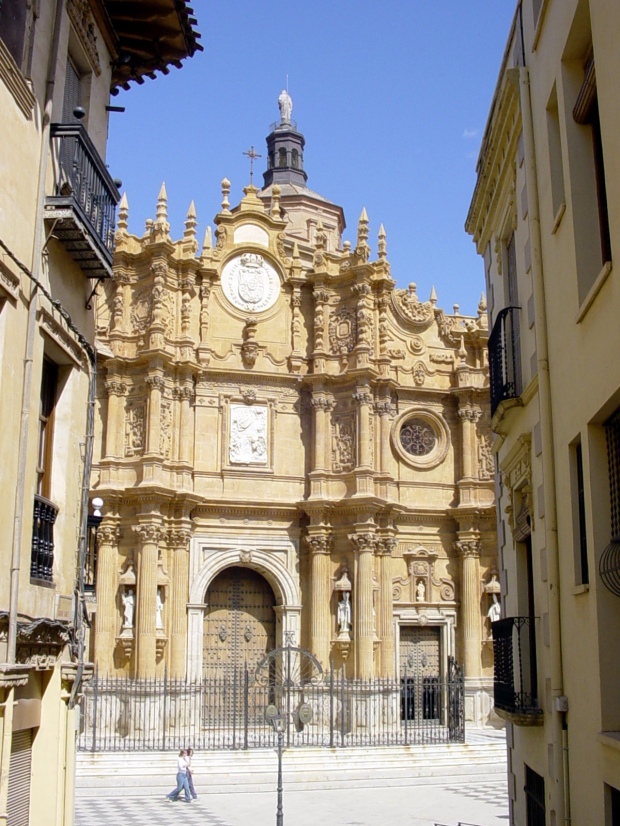
Guadix Cathedral

The Cathedral with its Baroque tower looked impressive from the outside but inside I felt that it was rather dark and gloomy. It stands in the Plaza de Constitución and this area of the town, the Barrio de Santiago, has many fine buildings.
..

guadix-sept-2003-002
Guadix Cathedral © Robert Bovington

Thursday, 1 December 2016

Cherín – a village in the Alpujarras

Cherín is a small village in the Alpujarras. It has an oil mill and many orange, mandarin and olive groves as well as almond trees.

 
Cherín © Robert Bovington


Monday, 28 November 2016

Mecina Bombaron (Alpujarra Granada)

Mecina Bombaron (Alpujarra Granada)
 
.
This area of the Alpujarras is particularly delightful located as it is on the wooded slopes of the Sierra Nevada. A recent census revealed that 2100 different types of plant exist in the Sierra Nevada National Park. Chestnut trees, in particular, are abundant here and the local architecture incorporates chestnut beams. The houses of Mecina-Bombarón are set amidst forests of chestnut. 
 .
Other blogs by Robert Bovington:
 .
“Photographs of Spain”
“Spanish Impressions”
“you couldn’t make it up!”
“a grumpy old man in Spain”
“bits and bobs”
“Spanish Expressions”
“Spanish Art”
“Books About Spain”

Trevélez hams

one of the drying sheds in Trevélez © Robert Bovington


Trevélez is famous for its ham and thousands of pigs’ legs are hung in drying sheds to produce large hams up to 10kg in weight. The dry and cold climate of the area is perfect for the production of Jamón Serrano. Trevélez is on the same slope as Mulhacén, which with a height of 3481 metres is the highest mountain in mainland Spain.
.
 Other blogs by Robert Bovington: 

“Photographs of Spain”
“Spanish Impressions”
“you couldn’t make it up!”
“a grumpy old man in Spain”
“bits and bobs”
“Spanish Expressions”
“Spanish Art”
“Books About Spain”

Friday, 25 November 2016

Almond Blossom in the Alpujarras

almond blossom nr Albondon (Alpujarra Granada) © Robert Bovington
  .
"It's like going to heaven," my wife commented, on our first drive into the Alpujarras. We had left Roquetas on one of the few grey days. It was in February and there was a lot of low cloud. We had only travelled a few miles up into the mountains, but it was a different world. Above the clouds, there was a bright blue sky and beautiful white and pink blossom of the almond trees. 
  .
Other blogs by Robert Bovington: 
   .
"Photographs of Spain" http://bovingtonphotosofspain.blogspot.com/
"Spanish Impressions" http://bobbovington.blogspot.com/
"you couldn't make it up!" http://bovingtonycmitup.blogspot.com/
"a grumpy old man in Spain" http://grumpybobbov.blogspot.com/
"bits and bobs" http://bovingtonbitsandblogs.blogspot.com/
"Spanish Expressions" http://spanishsayingsbovington.blogspot.com/
"Spanish Art" http://bovingtonspanishart.blogspot.com/
"Books About Spain" http://bovingtonbooks.blogspot.com/

Spanish troglodytes...

Guadix cave houses

by Robert Bovington  

.

Guadix cave house
Guadix cave house © Robert Bovington


The most famous feature of the town of Guadix in the province of Granada is the cave dwellings in the Barrio de la Cuevas where around half the population live. When I visited the area, I thought that I was in a scene from 'The Lord of the Rings'! It was just like 'The Shire' - with little white chimneys poking out of the ground! The caves are not primitive dwellings, however but are a solution to the fierce heat of the Andalucian summer. The interior of the cave houses are cool in summer and warm in winter and have all the necessities of modern living - it is quite strange seeing television aerials on the little hillocks! 

.

Other blogs by Robert Bovington:

"Photographs of Spain" http://bovingtonphotosofspain.blogspot.com/
"Spanish Impressions" http://bobbovington.blogspot.com/
"you couldn't make it up!" http://bovingtonycmitup.blogspot.com/
"a grumpy old man in Spain" http://grumpybobbov.blogspot.com/
"bits and bobs" http://bovingtonbitsandblogs.blogspot.com/
"Spanish Expressions" http://spanishsayingsbovington.blogspot.com/
"Spanish Art" http://bovingtonspanishart.blogspot.com/
"Books About Spain" http://bovingtonbooks.blogspot.com/

Sunday, 20 November 2011

Yegen (a village in the Alpujarras)

Yegen is a little village in the Alpujarra of Granada situated between the villages of Válor and Mecina Bombarón. Like other pueblos blancos in this region, Yegen is situated amidst spectacular scenery lying as it does on the southern slopes of the Sierra Nevada.

The Alto de San Juan lies to the north of the village. It is one of the lesser peaks of the Sierra Nevada National Park but it is still pretty high with an altitude of 9,000 feet. Yegen, itself, is 4000 feet above sea level and to the south, below the village, are the valleys of Cadíar and Ugíjar. Opposite is the Sierra de la Contraviesa, which can provide tantalising glimpses of the Mediterranean beyond to travellers who view it from the appropriate location.

In the immediate vicinity of the village are forests of chestnut above the village and further up poplar. Below the village are groves of orange and olive.

Yegen is not as picturesque as villages like Pampaniera and Capileira - nor as large as Órgiva and Ugíjar. However, it is worthy of mention because it was the setting for 'South from Granada' by the celebrated English author Gerald Brenan. He lived in Yegen between 1920 and 1930. A number of famous friends visited him there including Virginia Woolf.

Gerald Brenan
Brenan was one of the foremost English chroniclers of Spain and its people. He wrote 'The Spanish Labyrinth' and 'The Face of Spain' but it was 'South from Granada' for which he is most famous. It was his autobiography of his time in Yegen.

There is a plaque over the door of the house where the author lived and one of the streets in the village is named after him. There is even a 'Sendero de Gerald Brenan' footpath - it is one of a number of walking routes in the vicinity of Yegen. The long distance GR7 passes nearby. It is part of the International E-4 footpath that runs all the way from Tarifa to Greece. So even without Gerald Brenan, Yegen can lay claim to being well and truly on the map!


Monday, 14 November 2011

Las Alpujarras


by Robert Bovington
Ohanes
Las Alpujarras is the area of picturesque white villages that cling to the southern slopes of the Sierra Nevada. It is a nature lover's delight. Torrents cascading down from the frozen summits of the high Sierra have cut deep ravines into the rock leaving the lower slopes a brilliant green. Olive and almond trees abound and as one travels higher into the Alpujarras, oak, chestnut and pine forests flourish. Every season in the Alpujarras is special - even winter with its orange trees heavy with fruit.

Chris Stewart, in his best-selling book 'Driving over Lemons' tells a riveting tale of life on a remote farm in the Alpujarras. When we moved to Spain my wife and I, for a number of practical reasons - like not wanting the hard work that comes with working a farm, decided to live on the coast. However, intrigued by Chris Stewart's book, we started to regularly go on trips into the Alpujarras which are only an hour's drive away from our home in Roquetas de Mar. The Alpujarras has become one of our favourite places.

Ugíjar
Ugíjar is one of the most easterly towns of the Granada Alpujarras - the most westerly towns being Lanjarón and Órgiva. However, that is only half the story - a large part of the Alpujarras is located in Almería province! La Alpujarra Almeriense may not as be well known as the Granada Alpujarra but it is, nevertheless, a special place.

The whole region is special and one of great natural beauty. The valleys of the western Alpujarras are among the most fertile in Spain, though the steep nature of the terrain means that they can only be cultivated in small fields, so that many modern agricultural techniques are impractical. However, that adds to the charm of the area - at least for us idle buggers who don't have to work the fields. On a recent walk along the GR7 footpath, near the delightful little town of Válor, I saw a farmer ploughing the side of a hill using a horse and plough!


sheep rearing nr Nechite
Whole mountainsides are given over to growing things - many hillsides are terraced - a legacy of the Moors who also built irrigation channels - acequias - to bring water from the high Sierra to irrigate the crops. The region contains an abundance of fruit trees, especially grape vines, oranges, lemons, persimmons, figs and almonds. The eastern Alpujarra, in the province of Almería, is more arid, but still highly attractive and still rich in fruit bearing trees especially grape, olive and citrus varieties.


Many peoples tried to conquer this mountainous area but it was finally the Moors who succeeded in settling in the Alpujarras. They were the only owners of this region for hundreds of years and even after the fall of Granada in 1492 they were allowed to remain there. Only after the Morisco Revolt of 1568 were these enterprising people forced to leave.

The influence of the Moorish population can be seen in the agriculture, the local cuisine, the local carpet weaving and the numerous Arabic place names.
The houses of the Alpujarras are quite charming with little chimneys sticking out as a reminder that the winter evenings can be a tad chilly. The houses are built of stone, adobe and clay and their façades whitewashed. The distinct cubic construction of these buildings is reminiscent of Berber architecture in Morocco's Atlas Mountains. The steepness of the land means that the houses in the villages seem to be piled on top of one another, and their characteristic flat roofs, distinctive roofed chimneys, and balconies - tinaos - extending across the steep narrow streets give them a unique and picturesque appearance - from a distance they appear to cling precariously to the mountainside.

There are many villages in the region, the largest being Lanjarón, Órgiva, Ugíjar, Laujar de Andarax and Berja. All are situated at a considerable elevation but Trevélez, at 1476 metres above sea level, is the highest town in Spain.

Most of the villages are delightful places to live or visit but the three white villages in the gorge of the Rio Poqueira - Pampaneira, Bubión and Capileira -have become recognised tourist destinations and are very popular with walkers.

There are many other traditional villages of similar appearance including Mecina Bombarón and Laroles in Granada province together with the Almerian villages of Ohanes, Padules and Alboloduy.

Pampaneira
Trevélez  jámon


Monday, 17 October 2011

Yegen (Alpujarran village)


Yegen is a little village in the Alpujarra of Granada situated between the villages of Válor and Mecina Bombarón. Like other pueblos blancos in this region, Yegen is situated amidst spectacular scenery lying as it does on the southern slopes of the Sierra Nevada.


The Alto de San Juan lies to the north of the village. It is one of the lesser peaks of the Sierra Nevada National Park but it is still pretty high with an altitude of 9,000 feet. Yegen, itself, is 4000 feet above sea level and to the south, below the village, are the valleys of Cadíar and Ugíjar. Opposite is the Sierra de la Contraviesa, which can provide tantalising glimpses of the Mediterranean beyond to travellers who view it from the appropriate location.
In the immediate vicinity of the village are forests of chestnut above the village and further up poplar. Below the village are groves of orange and olive.
Yegen is not as picturesque as villages like Pampaniera and Capileira - nor as large as Órgiva and Ugíjar. However, it is worthy of mention because it was the setting for 'South from Granada' by the celebrated English author Gerald Brenan. He lived in Yegen between 1920 and 1930. A number of famous friends visited him there including Virginia Woolf.


Brenan was one of the foremost English chroniclers of Spain and its people. He wrote 'The Spanish Labyrinth' and 'The Face of Spain' but it was 'South from Granada' for which he is most famous. It was his autobiography of his time in Yegen.
There is a plaque over the door of the house where the author lived and one of the streets in the village is named after him. There is even a 'Sendero de Gerald Brenan' footpath - it is one of a number of walking routes in the vicinity of Yegen. The long distance GR7 passes nearby. It is part of the International E-4 footpath that runs all the way from Tarifa to Greece. So even without Gerald Brenan, Yegen can lay claim to being well and truly on the map!


Monday, 5 September 2011

Costa Tropical

by Robert Bovington

The Costa Tropical is the coastal region of the province of Granada sandwiched between the Costa del Sol to the west and the Costa Almería in the east. It is called the Costa Tropical because of the exotic fruits that grow there. Its unique microclimate has enabled the cultivation of chirimoya, mango, kiwi, avocado and sugar cane.  

There are some delightful stretches of this coastal region. In particular, Almuñecar and Salobreña are extremely attractive.

Calahonda (Granada)
Almuñecar derives from the Arabic name Hins-al-Monacar, or fortress city. The old town is strategically positioned on the top of a hill. The town has a long history dating from Phoenician times and much evidence of its historic past can be found there - the Castillo de San Miguel being the most obvious example. There are relics of its Roman occupants - aqueducts, baths, bridges, tombs and palaces. Evidence of the Moors occupation can be seen in the streets and buildings of the old town.

Bahía de La Herradura, Almuñecar
photo: public domain
Other sites are the necropolis from the 7th century BC, a 4th century fish salting plant and a number of churches dating from the Christian reconquest.


Gran Peñón, Salobreña
photo: Robert Bovington
Salobreña is rather splendid especially as viewed from a distance. It has been described

as the Jewel of the Tropical Coast - swathes of whitewashed houses tumble down the sides of the Gran Peñón, a rocky outcrop crowned by a Moorish castle. The old town's narrow streets are awash with bougainvillaea. From here one can look down on orchards of sub-tropical fruit trees and sugar cane plantations as well as Salobrena's modern development - not the ugly tower blocks of its Costa del Sol neighbours but low-rise, attractive apartments gracefully spreading out towards the shoreline and the beaches of the Costa Tropical.
Boabdil
photo: public domain
The biggest town in these parts is Motril. In the 18th century it was a small fishing village. Nowadays it is primarily a fishing port. It does have some attractive beaches and it is handily placed for driving to Granada and the Alpujarras. Its only claim to fame is the fact that Boabdil, the last king of Granada, lived there.

extract from “Spanish Impressions” by Robert Bovington
ISBN 978-1-4452-2543-2 available from www.lulu.com