Showing posts with label photos. Show all posts

Tuesday, 13 December 2016

Andalucía in photographs

by Robert Bovington
.
Andalucía is the southernmost region of mainland Spain. It is the land of bullfighting, flamenco and gypsies. It is the land of high sierras, charming white villages and magnificent cities.
Check out my Panoramio site for photos of this great region.

.


.

Robert Bovington
December 2016

Ronda in photographs

by Robert Bovington

Ronda is located in one of the most dramatic locations in Europe – perched 750 metres above sea level, on an inland plateau, sliced in half by the 100-metre deep Tajo gorge.
.

.
The town is a photographer’s dream – or a nightmare if there is insufficient film or lack of space on the digital camera’s memory card. Throughout Ronda there are delightful buildings like the ‘Palacio de Mondragón’ and the Casa del Marqués de Salvatierra’.
 .
Casa del Marqués de Salvatierra
© Robert Bovington
Palacio de Mondragón
© Robert Bovington


For my full article:-
http://bobbovington.blogspot.com/2012/03/ronda-article-by-robert-bovington.html
OR
http://bovingtoninspain.wordpress.com/2012/03/13/ronda-an-article-by-robert-bovington/ 

For photographs of Ronda click on the following link:-
http://www.panoramio.com/user/2391258/tags/Ronda
Robert Bovington
https://plus.google.com/118235640981670233395/about

Saturday, 10 December 2016

Andalucía in photographs


by Robert Bovington
.

Andalucía is the southernmost region of mainland Spain. It is the land of bullfighting, flamenco and gypsies. It is the land of high sierras, charming white villages and magnificent cities.
Check out my Panoramio site for photos of this great region.
.

 
Robert Bovington
March 2012

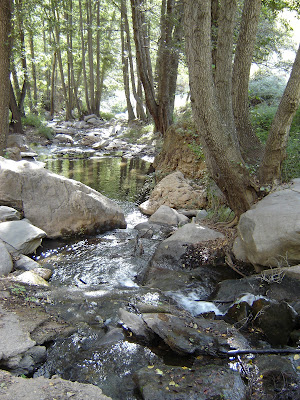
Nacimiento nr Laujar de Andarax


by Robert Bovington 
.
a lovely place for a picnic
.


Friday, 9 December 2016

Casarabonela - a pueblo blanco

Casarabonela is on the easternmost edge of the area officially classified as the White Towns of Andalusia. It is situated in the Sierra de las Nieves and is yet another attractive pueblo blanco that has preserved its Arabic heritage with its narrow streets and whitewashed houses festooned with flowers. Like many of the villages some of the alleyways are rather steep – on my last visit I left my aged relative sitting on a bench in the main plaza while my wife and I explored the charming alleyways.


An attractive church – the Iglesia de Santiago Apóstle is located in the main plaza. It has some interesting crypts and a museum of silver and religious artifacts.

Cómpeta - a beautiful town in the Axarquía

Cómpeta is an attractive little town set amidst the beautiful Axarquía in the province of Málaga. I visited at the beginning of February 2013 and though it is only 18 kilometres from the coast (Torrox nr Nerjar), it took about half an hour to drive from Torrox to Cómpeta because of the steep twisting road. The town nestles on the southern slopes of the Sierra de Almijara.
-
Cómpeta
Iglesia Ntra. Sra. Asunción
view south from nr Cómpeta

 more blogs by Robert Bovington…

“Spanish Impressions”
“postcards from Spain”
“you couldn’t make it up!”
“a grumpy old man in Spain”
“bits and bobs”
“Spanish Expressions”
“Spanish Art”
“Books About Spain”

Calar Alto Observatory


The province of Almería is the sunniest driest place in Spain. It also has the cleanest atmosphere in Europe and hardly any cloud making it an ideal location for installing an observatory.
Calar Alto, at an altitude of 2,168 metres (7,113 feet), is the highest mountain in Almería and was, therefore chosen as the location for an astronomical observatory. Called, appropriately enough, the Calar Alto Observatory, it is owned and operated jointly by Max-Planck institute for astronomy and the Institute of Astrophysics of Andalucía.
It was officially opened in July 1975 with the commissioning of its 1.2 metre telescope. The site has developed due to the strong ties between the German and Spanish owners and 4 more telescopes have been installed – the largest being 3.5 metres.
The Calar Alto mountaintop is situated in the Sierra de los Filabres, north of the town of Gérgal. It is a pleasant place to walk on a summer’s day, as the temperature is several degrees cooler than down on the coast.
.

.
Robert Bovington

more blogs by Robert Bovington…

“Photographs of Spain”
“postcards from Spain”
“you couldn’t make it up!”
“a grumpy old man in Spain”
“bits and bobs”
“Spanish Expressions”
“Spanish Art”
“Books About Spain”

Thursday, 8 December 2016

Pampaneira in the Alpujarras of Granada

by Robert Bovington 
.
Pampaneira is an extremely photogenic location with narrow streets, a fine Gothic church with a wooden roof in Mudéjar style, and several cafes and shops, which though ‘touristy’ are nevertheless delightful. The view from the road leading down into the town is breathtaking with the snow-capped peaks of the Sierra Nevada forming an attractive backdrop.


Pampaneira © Robert Bovington

Wednesday, 7 December 2016

Parque de María Luisa in Seville

by Robert Bovington 
.
This lovely romantic garden was donated to the city by the Infanta Maria Luisa Fernand at the end of the nineteenth century.  The famous landscape gardener, Jean Claude Nicolas Forestier, added further enhancements. 
 .
Parque de María Luisa in SevilleMonument dedicated to Bécquer © Robert Bovington
 .
In 1929, the park became the centre of the Ibero American Exhibition. Adjacent to the park is the beautiful Plaza de España which was used to showcase Spain’s industry and technology exhibits.
 .
Seville – Plaza de España © Robert Bovington

 .
more blogs by Robert Bovington…

“Spanish Impressions”
“postcards from Spain”
“you couldn’t make it up!”
“a grumpy old man in Spain”
“bits and bobs”
“Spanish Expressions”
“Spanish Art”
“Books About Spain”

Sunday, 4 December 2016

Yegen (Alpujarra Granada)

Yegen may not be as picturesque as villages like Pampaniera and Capileira – nor as large as Órgiva and Ugíjar. However, it is worthy of mention because it was the setting for ‘South from Granada’ by the celebrated English author Gerald Brenan. He lived in Yegen between 1920 and 1930. A number of famous friends visited him there including Virginia Woolf.
Yegen  - a street corner © Robert Bovington


Roquetas de Mar – Puerta Verde

The up-and-coming Las Salinas area of Roquetas is set on the vast plains of salt flats at the foot of the Sierra de Gádor.

Roquetas de Mar – Puerta Verde © Robert Bovington


Roquetas de Mar – Puerta Verde © Robert Bovington


Alboloduy (a village in the Alpujarras)

Alboloduy © Robert Bovington
.
Alboloduy nestles at the foot of a mountain with orchards of citrus, grape and olive spread out across the valley below. A lovely looking church stands prominent amidst the little white houses of Arabic origin that tumble down the hillside. The town is situated in the Sierra Nevada Natural Park.
.
Alboloduy © Robert Bovington
 
Alboloduy © Robert Bovington

Saturday, 3 December 2016

Gérgal - a pueblo blanco in Almería province

Gérgal © Robert Bovington
 .
Gérgal is a pleasant little town that stands on the banks of the river of the same name. 
Visitors can spend an enjoyable hour strolling the streets lined with the whitewashed buildings typical of Andalucía. Bougainvillea cascades lovingly down the sides of some of the buildings which are a mixture of early traditional and houses built in the 19th century, during the prosperous mining days. 
 .
Gérgal © Robert Bovington
A castle stands prominent at the top of a hill. It was built on the ruins of a medieval fortress in the 17th century but it is now a private dwelling.
.   
castillo de Gérgal © Robert Bovington
 

Wednesday, 30 November 2016

Granada – Carrera del Darro

..
The Carrera del Darro is a picturesque street that runs from the Plaza Santa Ana to the Paseo de los Tristes. 
It is presumably called the Carrera del Darro because the River Darro runs alongside. 
In Roman times the river was called aurus meaning ‘River of Gold’ – in those days panners made meager living searching for the precious mineral in the riverbed. 
Several name changes later it became the Río Darro.
Robert Bovington

Sunday, 22 July 2012

Protected Landscapes in Spain

by Robert Bovington

Spain has a rich scenic diversity. Vast areas of the country remain wild, rugged and sparsely populated and large parts of the country are protected. Within Europe, Spain leads the way in the conservation of its heritage. There are many categories of protection including national parks, natural parks and biosphere reserves. There are two biosphere reserves close to my heart and close to where I live - the Cabo de Gata and the Sierra Nevada. The Cabo de Gata was designated a UNESCO biosphere reserve in 1997, the Sierra Nevada in 1986. Both meet UNESCO's criteria in that they are ecologically diverse and demonstrate a balanced relationship between humans and the environment.


The World Network of Biosphere Reserves is the collection of all 531 biosphere reserves in 105 countries (2009). Spain has thirty-three which is a proportionately higher number compared with other European countries.

These include the spectacular Ordesa National Park in the Pyrenees, the lowland wilderness of the Doñana National Park in western Andalucía and the snow-capped heights of the Picos de Europa in Cantabria.

The Sierra Nevada also has National Park status but, then, it has quite a lot going for it - it contains the Iberian Peninsula's highest mountains, which are the spectacular backdrop to the magnificent city of Granada.


Sierra Nevada - view from Puerto de Ragua
photo: Robert Bovington

Spain was one of the first countries in Europe to establish national parks when, in 1918, the Montaña de Covadonga National Park was established. Today, this beautiful area is known as the Picos de Europa, situated in the Cantabrian Mountains in northern Spain. Incidentally, the Picos de Europa has also achieved UNESCO Biosphere status. Currently, there are 15 national parks in Spain.

There are also many hundreds of natural areas that have been afforded protection. National parks are afforded the highest level of protection followed by natural parks. There are also natural monuments, special protection areas, nature reserves, protected landscapes, biotopes, nature enclaves, wildlife reserves, marine reserves, rural parks, natural landscapes of national interest and sites of scientific interest and, of course, biosphere reserves.

Natural parks are pretty special but there are too many to list here. Every autonomous community has a number of protected areas with Catalonia, Andalucía and the Canaries being the most prolific with several hundreds between them.

In Andalucía there are around 150 protected areas including 23 natural parks. Three of my favourites are the Cabo de Gata-Níjar Natural Park, the Sierra de Grazalema Natural Park and the Sierra de las Nieves. All three are biosphere reserves.

Sierra de Grazalema
photo: Robert Bovington

Sierra de las Nieves
photo: Robert Bovington

Extract from my Pinterest "Spain - natural spaces" pinboard

Saturday, 31 March 2012

Soria

Soria is situated in Castile-León about 110 miles northeast of Madrid and lies on the western bank of the River Duero. The city's historic centre preserves an important Romanesque legacy as well as excellent examples of civic architecture.

In the delightful and typically Castilian Plaza Mayor stands a number of interesting buildings including the Casa de los Doce Linajes, a 17th-century building that is currently the town hall. The former town hall is next door but is currently used as a Cultural Centre. The Tower of Doña Urraca is situated in one corner of the square and the Church of Santa María La Mayor stands just behind it.

Plaza Mayor - photo: public domain (Txo)
Santa María La Mayor
photo: public domain (Zarataman)

Talking about churches, Soria is noted for its collection of architect-urally distinctive churches many of them Roman-esque. Let's take a look at some of them!

The 12th-century Church of Santo Domingo, situated in the historic quarter, is one of the town's most important places of worship. Its main front is considered to be one of the finest Romanesque façades in existence - so much so - that it has been declared a National Monument. This honour has also been bestowed on the cloisters of another religious building in Soria - the Procathedral of San Pedro. It was built at the end of the 12th century and reconstructed during the 16th. It has a Plateresque façade and three Gothic naves. The Church of San Juan de Rabanera is pretty impressive too - probably why it, too, is a National Monument! This 12th-century temple has a number of Byzantine influences. Its façade is particularly beautiful and the inside is also attractive, especially the apse and reredos.

Santo Domingo
photo: public domain (Txo)

San Juan de Rabanera
photo: public domain (Elena FD)


Soria Concatedral de San Pedro
photo: public domain (Zarataman)
There are other fine churches in Soria but I don't want to weary you with all their details. I will, however, mention two other religious buildings - the Hermitage of San Saturio and the Monasterio de San Juan de Duero. Both are on the opposite side of the River Duero than the town centre. However, it is not too far to walk to the monastery - less than 500 metres! From the Plaza Mayor, walk along Calle Real and then Calle San Augustin, which crosses the river, and then turn left to find the monastery. It is well worth the short detour from the town centre because the site is one of the most original Romanesque monuments in Spain. A 12th-century church and a wonderful cloister are the only remains of the former monastery. The arches are quite splendid - and different! They are a mix of Romanesque, Mudéjar and Arabic styles. The monastery belonged to the order of the Knights Templar from the twelfth century until it was abandoned in the eighteenth. It is yet another National Monument and one of the most visited sites in Castilla y León. It is a delightful place to visit and the scenery is not bad either - situated as it is on the banks of the River Duero it has provided an inspiring landscape for Spanish artists and poets.

Monasterio de San Juan de Duero cloisters
photo: public domain ( Txo)
Hermitage of San Saturio
photo: public domain ( Zarataman)
Less than 1 kilometre down river is the Baroque Hermitage of San Saturio, patron saint of the town. It was carved out of the rock in the eighteenth century.

Before we leave Soria, we must explore some of the other delightful places in this attractive city. In the streets of the historic quarter there are many beautiful buildings - no more so than the Palacio de los Condes de Gómara. It is considered to be the jewel of Sorian civil architecture with its outstanding stone façade and quadrangular tower. It is a Renaissance building built in the 16th century and now houses the Provincial Court. It goes without saying that it has been declared a National Monument! Another fine residence is the Palacio de los Ríos y Salcedo. This 16th-century Renaissance building is also a National Monument and, these days, it serves as the Provincial Historic Archive.


Palacio de los Condes de Gómara
photo: public domain ( Numantino)
Soria isn't just ancient monuments however. There are green spaces like the Dehesa, which contains many exotic trees and shrubs, and the Parque El Castillo - a hill on which stands the Parador de Soria. It offers lovely panoramic views of the Duero, the countryside, the distant mountains and the city - a city that has inspired poets like Antonio Machado, Gerardo Diego and Gustavo Bécquer. Soria, situated in a natural beauty spot by the banks of the River Duero, is certainly worth visiting!

This is an extract of the text in the "Soria" section of "Spanish Impressions"
https://plus.google.com/118235640981670233395/about


more blogs by Robert Bovington...
"Photographs of Spain"
"postcards from Spain"
"you couldn't make it up!"
"a grumpy old man in Spain"
"bits and bobs"
"Spanish Expressions"
"Spanish Art"
"Books About Spain"

Wednesday, 28 March 2012

Vitoria-Gasteiz

Vitoria-Gasteiz is the capital of the Basque region.

Old Cathedral
photo public domain (Zarataman)
Vitoria has many architectural gems and still conserves much of its medieval layout. To begin our exploration of the city, let's start at the Cathedral of Santa María. It started life as a 13th century church-fortress in Gothic style and after a number of additions became a cathedral 1861. It is known as the Old Cathedral because there is a newer one in the 19th century suburbof El Ensanche. 
Casa del Cordón
photo public domain (Mikelele)
In the area around the Cathedral are the oldest streets in the city. They have names like Cuchillería (knifesmiths), Herrería (blacksmiths), Zapatería (shoemakers) and Pintorería (painters) reflecting the craftsmen's guilds that thrived there. In this medieval area there are a number of Renaissance buildings including the Palace of Escoriaza-Esquibel with its picturesque courtyard. Other palaces include those of Urbina Zárate, Bendaña, Villa Suso and the Casa del Cordón, which was built in the 15th century in late Gothic style. This Historic-Artistic Monument has an attractive façade that includes the coat of arms of the Catholic Monarchs. 

In the Plaza de la Virgen Blanca is a monument to Wellington's victory at the Battle of Vitoria. The Church of San Miguel is located in this square and its Gothic portico leads to Los Arquillos, an arcaded walk that connects the historic quarter with the nineteenth century new suburb. Here, too, there are fine palaces, churches and civic architecture but they are more modern, having been built in the 19th and 20th centuries.

Plaza de la Virgen Blanca
photo: public domain (Guyletsbuild)
The new cathedral is called Concatedral de María Inmaculada. It is a Neogothic building that was started at the beginning of the 20th century. Next door, is the 19th-century Basque Parliament. Of the palaces built in this area of Vitoria, the Augusti Palace is yet another building that has been declared a Historic-Artistic Monument. It houses the Museum of Fine Arts, one of many museums in the city.

New Cathedral
photo: public domain (Zarataman)
Torre de Doña Otxanda
photo: public domain (Miguel Andrade)
Other museums in Vitoria-Gasteiz include the Museum of Archaeology; the Arms Museum which contains weaponry rather than body parts; the Natural History Museum and the Museum of Natural Sciences which is housed in the Torre de Doña Otxanda, a slender tower constructed in the 15th century. A museum with a difference is the Museo Fournier de Naipes. It is a museum of playing cards. It contains - um - playing cards - lots of them - 18,500 decks to be precise. 


Museo Fournier de Naipes y Museo de  Arqueología 
photo: public domain (Guyletsbuild)
statue in Parque Florida
photo: public domain (Zarataman)
With all these medieval monuments and museums, some of you may be forgiven for thinking that Vitoria is a dull boring city - it is not! There are many green spaces - more than other cities in Spain. Only minutes from the historic quarter is Parque Florida - a 19th-century garden with bandstands, statues, ponds and, of course, plants. Other parks include San Juan de Arriaga Park, the largest in the city. Only half an hour's walk from the city center is the Forest of Armentia - a vast parkland crisscrossed by cycle paths. And that is another thing; the city of Vitoria-Gasteiz has promoted the use of bicycles. There are many cycle routes both within and without the city and, what's more, the Vitoria-Gasteiz Town Council has decreed that there is no charge for hiring the bikes. It is just one of a number of environmentally friendly schemes drawn up by this forward thinking band of politicians - like rubbish collection - rubbish is efficiently disposed of through underground tubes to distant incinerators. No wonder that the city has won prizes for its cleanliness and its greenness. A vast green belt completely surrounds the city and the citizens enjoy more open space per head of population than any other city in Europe. 

Please note:
this article is a condensed version of the text that appears in "Spanish Impressions":

more blogs by Robert Bovington... 

"Photographs of Spain" 

"postcards from Spain" 

"you couldn't make it up!" 

"a grumpy old man in Spain" 

"bits and bobs" 

"Spanish Expressions" 

"Spanish Art" 

"Books About Spain"