Showing posts with label UNESCO World Heritage. Show all posts

Saturday, 10 December 2016

Granada

by Robert Bovington
 .
Granada is a city in the autonomous region of Andalucía, situated at the foot of the Sierra Nevada. It is one of the great cities of Spain if not the World.
When visiting Granada it is tempting to spend all one’s time admiring the Alhambra. From afar one can admire the beauty of its red walled parapets contrasting with the snow capped Sierra Nevada whilst once inside one can absorb oneself in the sheer splendour of its fantastic palaces and its tranquil gardens. However, Granada has much more to offer the visitor.
It is a city where both Moorish and Christian history is visible in art and architecture.
Moorish Granada is exemplified by the UNESCO World Heritage Sites of the Alhambra, the Generalife and the Albaicín district whilst the Capilla Real and the Cathedral represent Christian Granada.
 .
Granada - Alhambra © Robert Bovington

 .
for more photographs of Granada click on the following link….
 .
Robert Bovington
December 2016

Friday, 2 December 2016

Mudéjar Architecture in Teruel


.
The towers of Teruel are quite splendid and UNESCO think so too – they have included them in the Mudéjar Architecture of Aragón World Heritage site. They include the Belfry-Tower of the Cathedral of Santa María, the towers of the churches of San Pedro, San Salvador and San Martín.

Wednesday, 30 November 2016

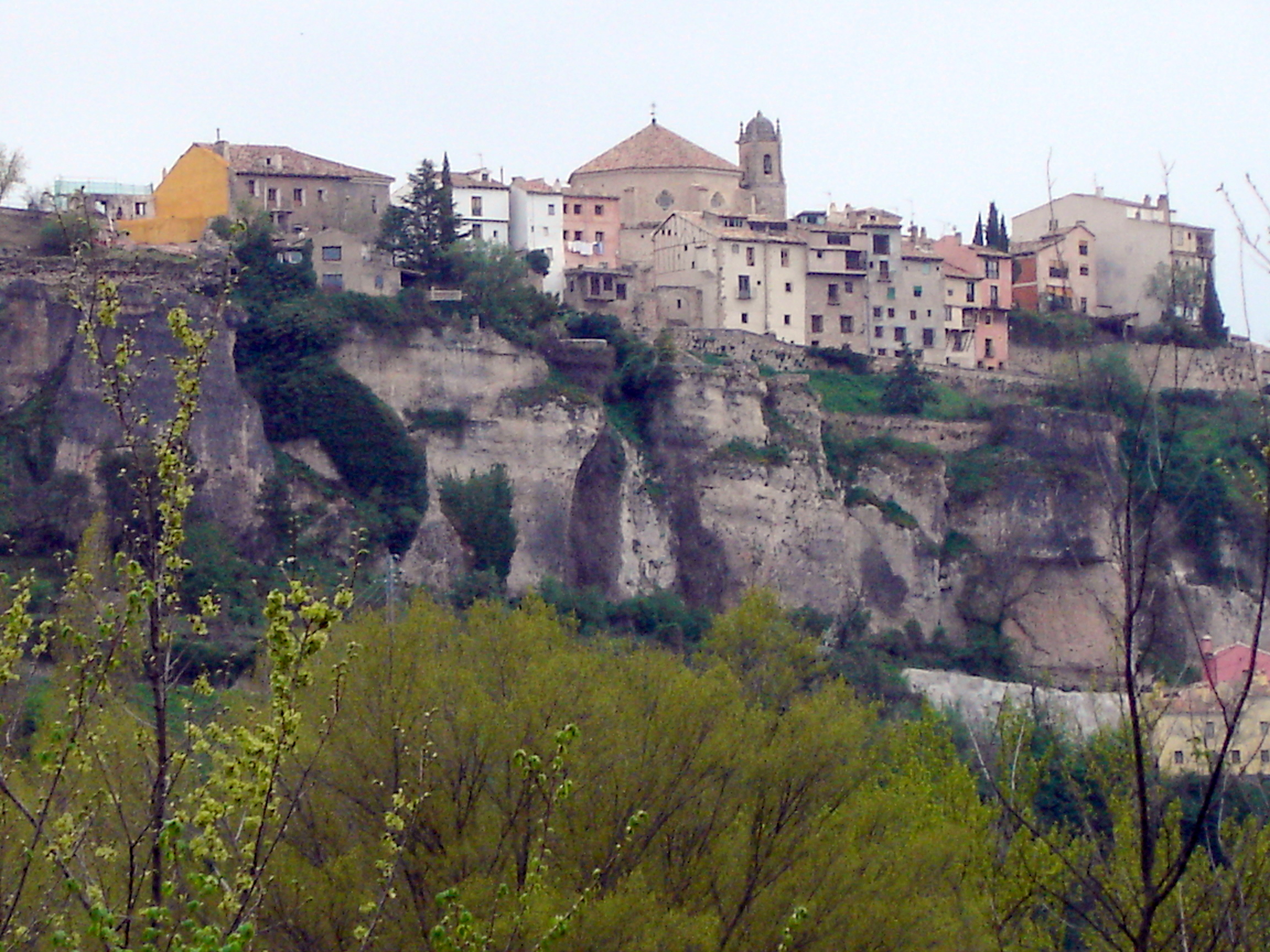
Cuenca - a UNESCO Heritage site in Spain

The beautiful and ancient city of Cuenca is steeped in history and perfectly preserved and that is why UNESCO declared it a World Heritage Site. Famous for its ‘Hanging Houses’, there are many other reasons why this city is so special.
.
Image
.
The old town is perched on a precipice above two deep gorges carved out by the rivers Huécar and Júcar. It is here that the medieval Casas Colgadas – the Hanging Houses literally overhang the Huécar gorge.

Within the old quarter are handsome old mansions interspersed with interesting religious buildings. The 12th century Cathedral is quite unique in that it combines Gothic and Anglo-Norman style. Queen Leonor, the wife of Alfonso VIII, ordered its construction. There are a number of museums in the city including the National Museum of Abstract Art and the Provincial Archaeological Museum.

Robert Bovington

Tuesday, 29 November 2016

El Palmeral - the palm grove of Elche

Iberians, Phoenicians, Greeks, Romans, Visigoths and Moors have in turn, invaded the Land of Valencia and nowhere in this region are the legacies left by these ‘guests’ more evident than in Elche.
The most visible memento is the palm trees that were planted by the Moors. Elche is simply inundated with them! Over 200,000 palm trees surround the city making it more like a forest than an urban landscape. The Moors formally laid out the ‘Palmeral of Elche’ in the 10th century. They installed elaborate irrigation systems and these are still functioning today as are the agricultural practices developed by these enterprising people. 
Elche is a World Heritage site because the palm forest is so impressive and important…. 
(extract from “Spanish Matters (chap 3 – El Huerto de Cura)”
Other blogs by Robert Bovington:
.
“Photographs of Spain”
“Spanish Impressions”
“you couldn’t make it up!”
“a grumpy old man in Spain”
“bits and bobs”
“Spanish Expressions”
“Spanish Art”
“Books About Spain”

Thursday, 16 May 2013

Gaudí

Antoni Gaudí by Robert Bovington
Antoni Gaudí was a Spanish architect who worked mostly in Barcelona which contains some superb examples of his brilliantly inventive work - like the enormous, but unfinished cathedral, La Sagrada Familia; the fascinating Parc Güell and Casa Milá with its wacky rooftop.


Sagrada Familia 2012
La Sagrada Familia


He was an extremely original exponent of Art Nouveau who disliked straight lines as demonstrated by the wavy façade of Casa Milá. He used colourful collages of appliqué materials to add further ornamentation to the surfaces of his structures.


Casa Milá rooftop


Seven of his Barcelona accomplishments are World Heritage sites. They are Casa Milá, Casa Vicens, Casa Batlló, Palau Güell, the crypt in Colonia Güell, Park Güell and the Sagrada Familia church.


Casa Batlló - close up


Gaudí was born in 1852 in Catalonia. He died in 1926 having been run over by a tram and, fittingly, was buried in La Sagrada Família.


more blogs by Robert Bovington...
"Photographs of Spain"
"postcards from Spain"
"you couldn't make it up!"
"a grumpy old man in Spain"
"bits and bobs"
"Spanish Expressions"
"Spanish Art"
"Books About Spain"

Thursday, 8 December 2011

Los Vélez

by Robert Bovington

Los Vélez is situated in the Sierra de Maria in the north of the province of Almería. Within this area is the impressive Parque Natural de María-Los Vélez as well as the twin towns of Vélez Blanco and Vélez Rubio.

Archivo:Castillo Vélez-Blanco.JPG
Castillo Vélez-Blanco - Juan José Rodríguez

Vélez Blanco is a typical pueblo blanco with its whitewashed houses nestling at the foot of a rocky outcrop. At the top of this prominence, a majestic castle looms over the town. It was built in the 16th century on the orders of the first Marquis of Vélez. Unfortunately, only the impressive exterior of the fortress remains - the insides are in New York, on display in the Metropolitan Museum.

There are a number of fine religious buildings in the town. The 16th century parish church of Santiago mixes Gothic, Renaissance and Mudéjar elements. The Church of Magdalena was built on the ruins of an old mosque whilst the Convent of San Luís was also built in the 16th century.

A few miles away is Vélez Rubio. It is a small town with several mansions and a number of religious buildings. One of the churches is quite magnificent - the Baroque Church of La Encarnación which was built in the 18th century. The twin bell-towers dominate the town's skyline.

Another important building in Vélez Rubio is the former 18th century Royal Hospital, which houses a museum, dedicated to local history.

Despite the historic monuments in the two towns, Los Vélez is better known for its caves, which have UNESCO World Heritage status, particularly the Cueva de los Letreros which is situated between Vélez Blanco and Vélez Rubio. It was here that prehistoric wall paintings were discovered in the 18th century. The cave was declared a National Monument in 1924. One of the paintings, the Indalo, is the symbol of the province of Almería.


Robert Bovington
Roquetas de Mar
December 2011
more blogs by Robert Bovington...


"Photographs of Spain"
"postcards from Spain"
"you couldn't make it up!"
"a grumpy old man in Spain"
"bits and bobs"
"Spanish Expressions"
"Spanish Art"
"Books About Spain"