Wednesday, 23 November 2016

Sevilla - Fábrica Real de Tabacos

.
 .
The Fábrica Real de Tabacos was the original tobacco factory - the one immortalised in the opera Carmen. Nowadays, it is part of Sevilla University. When the original factory was built in 1725 it was the second-largest building in Spain after El Escorial! It is an imposing Baroque and Rococo building.
...
Other blogs by Robert Bovington:
.  ...
"Photographs of Spain"
"Spanish Impressions"
"you couldn't make it up!"
"a grumpy old man in Spain"
"bits and bobs"
"Spanish Expressions"
"Spanish Art"
"Books About Spain"

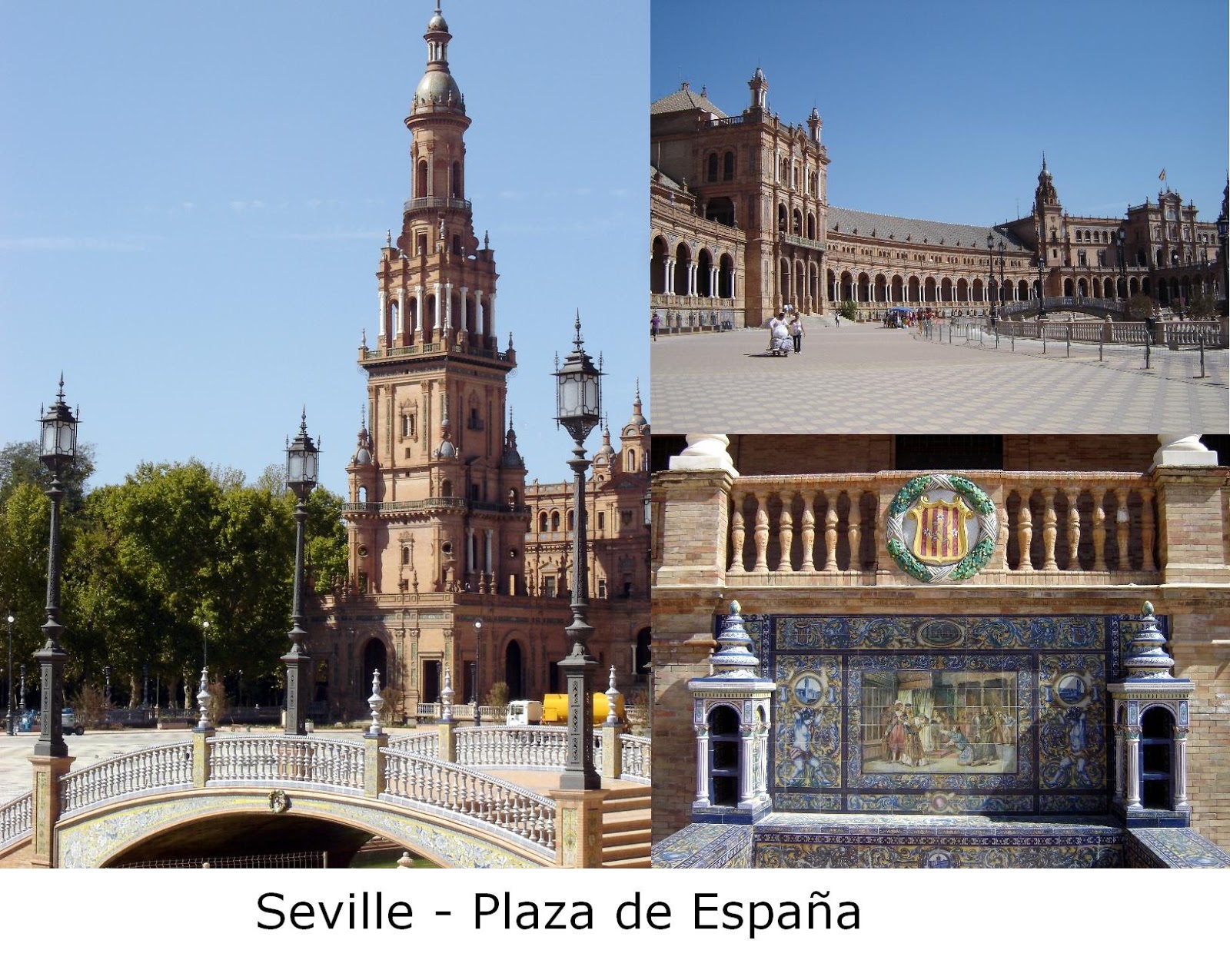
Seville - Plaza de España

The Plaza de España is a magnificent square - sorry - a magnificent semicircular piazza that was designed as the centrepiece for the Latin American Exposition of 1929. Two hundred metres wide, it is almost entirely covered with glazed tiles that depict historical scenes and pictures of other Spanish related subjects.  
 .
Other blogs by Robert Bovington:
. 
"Photographs of Spain"
"Spanish Impressions"
"you couldn't make it up!"
"a grumpy old man in Spain"
"bits and bobs"
"Spanish Expressions"
"Spanish Art"
"Books About Spain"
Save

Osuna - Colegiata de la Asunción

Osuna has a particularly imposing 16th-century Renaissance church called the Colegiata de la Asunción. 
.
 .
Other blogs by Robert Bovington:
.
"Photographs of Spain"
"Spanish Impressions"
"you couldn't make it up!"
"a grumpy old man in Spain"
"bits and bobs"
"Spanish Expressions"
"Spanish Art"
"Books About Spain"
Save

Sunday, 20 November 2016

Benaoján - a village in the Serranía de Ronda

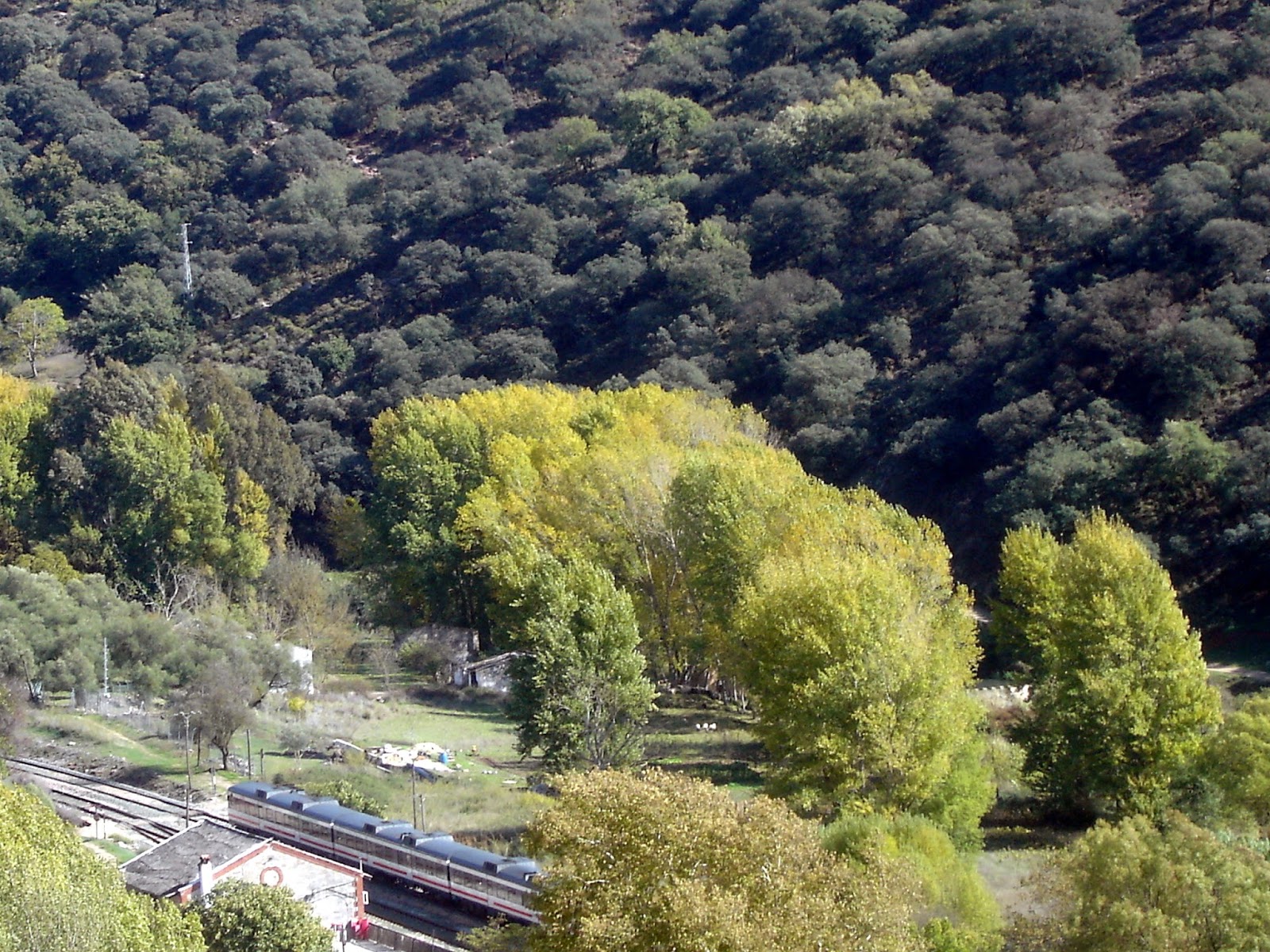
railway line viewed from just above Benaoján © Robert Bovington
Benaoján is a pretty village that I first encountered when I travelled on the Algeciras to Ronda railway. Near the railway station there is a footpath to Cueva de la Pileta - a cave with primitive rock paintings of animals that, apparently, date from around 25,000 BC. Just above the village there is a mirador where spectacular views can be enjoyed - poplar, willow and oleander at the bottom of the valley; evergreen oak, peonies, thickets of kermes oak, retama and broom on the hillside; gorse, thyme and sage beneath jagged outcrops of limestone on higher ground and probably the odd vulture or two circling above. 
There are about 300 griffin vultures in the Serranía de Ronda, which is a tribute to the local conservationists as during the 1960's the birds were almost extinct. 

Other blogs by Robert Bovington:
"Photographs of Spain"
"Spanish Impressions"
"you couldn't make it up!"
"a grumpy old man in Spain"
"bits and bobs"
"Spanish Expressions"
"Spanish Art"
"Books About Spain"

Seville - Plaza de España

The Plaza de España is a magnificent square - sorry - a magnificent semicircular piazza that was designed as the centrepiece for the Latin American Exposition of 1929. Two hundred metres wide, it is almost entirely covered with glazed tiles that depict historical scenes and pictures of other Spanish related subjects.  

Other blogs by Robert Bovington:
"Photographs of Spain"
"Spanish Impressions"
"you couldn't make it up!"
"a grumpy old man in Spain"
"bits and bobs"
"Spanish Expressions"
"Spanish Art"
"Books About Spain"

Saturday, 1 February 2014

Ciudad Real

by Robert Bovington
https://plus.google.com/+RobertBovington/posts

The city of Ciudad Real has good connections. Firstly, the Madrid-Sevilla AVE high-speed train stops there. Secondly, it is associated with Royalty - King Alfonso X founded it in 1255 and gave it the name Villa Real. Later, in 1420, John II gave it the status of a city - Ciudad Real means Royal City in Spanish. Then, in the 17th century, the city was the capital of La Mancha. Today, it is the capital of the province of the same name - one of five provinces in the autonomous community of Castile-La Mancha.


So, if travelling on the AVE high-speed train between the capital of Spain and the capital of Andalucía, is it worth stopping off at Ciudad Real? Well, like many Spanish cities, Ciudad Real does have its fair share of historic monuments. There are a number of religious buildings including the Iglesia Santiago, one of the oldest churches in the city, which was originally Gothic but which was later enhanced with a Mudéjar roof and Baroque vaults. The Cathedral of Santa María del Prado is another religious building with a combination of styles - Gothic with Baroque interior. The Iglesia San Pedro is another church with a fusion of styles including alternating pointed Gothic arches and Mudéjar horseshoe arches.


Iglesia San Pedro

Another notable landmark is the remains of the 14th-century walls, which were built to protect the Christian, Moor and Jewish population of that time. In those days, there were 4 kilometres of walls with 130 towers. However, the principal attraction is Puerta de Toledo, a Mudéjar gate that was built in 1328 and which is a national monument.


more blogs by Robert Bovington...

"Photographs of Spain"
"postcards from Spain"
"you couldn't make it up!"
"a grumpy old man in Spain"
"bits and bobs"
"Spanish Expressions"
"Spanish Art"
"Books About Spain"